Understanding OSB Grades Before You Build Something That Regrets the Weather
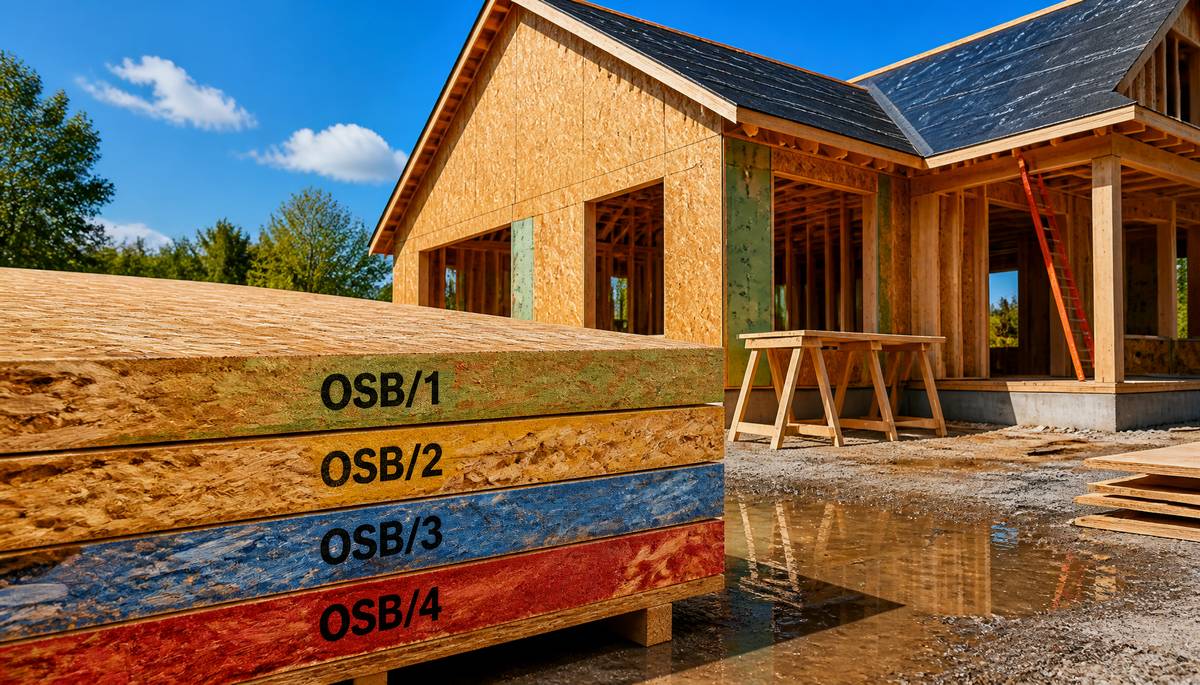 OSB board often arrives on site looking confident, flat, and ready for responsibility, which is impressive for something made of compressed wood strands and glue. Problems usually begin later, when rain appears uninvited and the board’s job description was misunderstood. Knowing which type of OSB belongs where is the difference between a solid build and a slow lesson in material science. Early research helps, especially when working with construction-grade sheets like osb-board intended for specific environments.
OSB, or oriented strand board, is engineered for strength and consistency, but it is not one single product. Grades exist for a reason, and ignoring them is how sheds develop opinions about the weather.
What OSB Grades Actually Mean
OSB is typically classified into four main grades, each designed for a different level of structural demand and moisture exposure. These grades are not suggestions. They are instructions.
OSB/1 is intended for interior use in dry conditions. It is suitable for furniture components or packaging, but it has no interest in humidity. OSB/2 handles load-bearing applications indoors, such as flooring in controlled environments.
OSB/3 is where things get practical. This grade is load-bearing and designed for use in humid conditions. It is the most commonly used option for roofing, wall sheathing, and general construction where moisture might make a guest appearance. OSB/4 is the heavy-duty sibling, built for high loads and high moisture, typically reserved for demanding structural applications.
This paragraph stays serious because misgrading OSB is not a creative risk. It is a predictable failure.
Moisture Resistance Is Not Waterproofing
One of the most common misunderstandings about OSB is moisture resistance. OSB/3 and OSB/4 can tolerate moisture, but they are not waterproof. They resist swelling better than lower grades, yet prolonged exposure to water will still cause issues.
Edges are the most vulnerable areas. Sealing cut edges and ensuring proper ventilation dramatically improves performance. Roofs need membranes. Walls need breathable barriers. Floors need separation from ground moisture. OSB performs well when treated like part of a system rather than a lone hero.
Assuming OSB can handle unlimited rain because it survived one storm is how projects develop character lines.
Load Ratings and Why Weight Matters
OSB grades also determine how much load a board can safely support. This matters for floors, roofs, and any surface expected to hold more than dust and optimism.
- OSB/2 supports load indoors only
- OSB/3 supports structural load in humid conditions
- OSB/4 supports higher loads with added moisture tolerance
Choosing the right grade ensures stiffness, reduces deflection, and keeps fasteners behaving as intended. Structural confidence comes from matching material capability to actual demand rather than hopeful estimates.
Where Each OSB Grade Belongs and Where It Really Doesn’t
Using OSB correctly is often more about restraint than ambition. OSB/1 belongs firmly indoors, away from humidity, where it can live a calm and predictable life. OSB/2 works well for internal floors and structural elements in dry buildings, especially during staged construction where weather exposure is controlled.
OSB/3 earns its reputation on building sites because it tolerates moisture without immediately protesting. It is suitable for roof decking, wall sheathing, and subfloors, provided it is protected during and after installation. Leaving OSB/3 exposed indefinitely is not a test of quality; it is an experiment with a known ending.
OSB/4 is used when loads are higher and conditions are less forgiving. This includes industrial floors, demanding structural applications, and situations where safety margins matter. It costs more, but it also sleeps better at night.
Installation Details That Decide the Outcome
Even the correct OSB grade can fail if installation is careless. Expansion gaps are essential. OSB moves with moisture, and denying it space leads to buckling and noise that announces itself at inconvenient times.
Fixings should be appropriate for the application and spaced correctly. Overdriving fasteners compresses strands and weakens holding power. Under-fixing invites movement. Neither option improves the mood of a finished surface.
This is another serious paragraph because technique matters as much as material.
Finishing OSB Without False Promises
OSB can be left visible, but it should be sealed. Clear finishes reduce dust, limit moisture absorption, and make surfaces easier to clean. Painted OSB requires primers that account for texture and resin content.
Outdoors, OSB should never be the final exposed surface. Cladding, membranes, and overhangs extend lifespan dramatically. Expecting OSB to perform uncovered is like leaving tools outside and blaming them for rust.
Weathering the Board
OSB does not fail because it is poorly made. It fails because it is misunderstood. Grades exist to guide decisions, not complicate them.
When the right OSB is chosen, installed properly, and protected where necessary, it performs reliably and economically. The weather will still do what it does best, but the structure will no longer take it personally.
|
|

