Designing a Pond Like a Natural Ecosystem Helps Your Garden Thrive
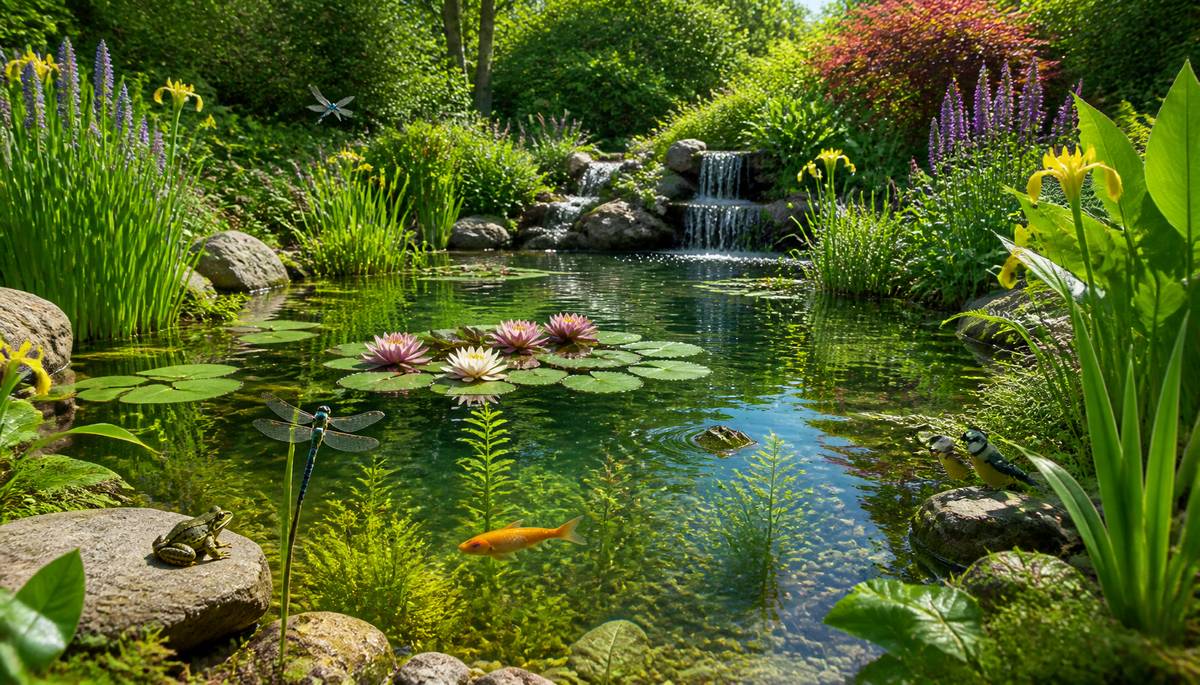 A well-designed pond doesn’t behave like a fancy bowl of water dropped into the lawn for decoration. It behaves like a living, self-adjusting system—one that can clean itself, feed itself, and host an entire cast of tiny garden “employees” who work the night shift without asking for wages or snacks.
When a pond is built to mimic natural water bodies, it stops being a constant project and starts being a partner. You’re not fighting algae every weekend, endlessly tinkering with chemicals, or wondering why your water looks like pea soup that’s having a bad day. Instead, you’re setting up balance: plants that filter, insects that graze, amphibians that patrol, and bacteria that quietly do the unglamorous work of turning waste into something useful.Nature loves balance and it’s annoyingly good at it A natural pond isn’t “perfect” in the showroom sense. It has shallows and depths, sunny patches and shaded corners, mud that looks suspicious until you realize it’s basically a nutrient processing center. That variety is the point.
When you build a pond as a small ecosystem, you create multiple micro-habitats. Different creatures use different zones, and different plants do different jobs. This is where the pond starts paying you back. The same biodiversity that makes a pond interesting also makes it stable. Stability is what reduces maintenance.
Here’s the serious bit: water quality improves when biology is doing most of the filtering. Instead of relying on a single mechanical solution, you spread the workload across living systems. Submerged plants oxygenate the water and compete with algae for nutrients. Marginal plants pull excess nitrogen and provide cover for tadpoles and insect larvae. Beneficial microbes break down organic matter so it doesn’t pile up and cause problems.
Think of it like organizing a kitchen. If everything goes into one drawer, chaos wins. If each tool has a job and a place, things run smoothly. Also, fewer emergency cleanups happen at inconvenient times.Plant choices that act like a clean-up crew If a pond is an ecosystem, plants are both the lungs and the water treatment system. Picking them based on looks alone is a bit like hiring a lifeguard because they have a nice hat.
A natural-style pond usually includes a mix of plant types, each with a role: - Submerged oxygenators to support aquatic life and reduce algae pressure
- Floating plants to shade the water and limit sunlight that algae crave
- Marginal plants along the edges to filter runoff and provide habitat
- Deep-water plants to stabilize the pond’s nutrient cycle and add structure
This isn’t about stuffing the pond until it resembles a botanical queue. It’s about coverage. A good rule of thumb is to aim for enough plant presence that sunlight doesn’t hit every inch of water all day long. Shade is algae’s natural enemy. Shade also makes fish less jumpy, frogs more comfortable, and dragonflies more likely to treat your pond like prime real estate.
Some paragraphs deserve a straight face: Avoid overfeeding fish, don’t let lawn fertilizer wash into the pond, and manage leaf litter in autumn. Ecosystems can handle a lot, but they’re not magic. If nutrients pour in faster than plants and microbes can process them, the pond will still complain—just more politely than a human would. Edges, shelves, and shallows where the real action happens The edge of a pond is not just a border. It’s the busiest zone, and it’s where natural ponds outperform “water feature” ponds by a mile. Shallow shelves give amphibians a place to climb out, give birds a place to drink safely, and give young aquatic creatures a warm, protected nursery area.
A steep-sided pond can look tidy, but it’s like building a hotel with no staircase. Wildlife arrives, takes one look, and decides the neighbor’s place is more welcoming. Sloped margins and planting shelves also make the whole system more resilient because they increase surface area where beneficial bacteria can live and where plants can root.
And yes, creatures notice. Frogs don’t write reviews, but their absence is feedback all the same.Water movement that doesn’t feel like a washing machine Natural water bodies aren’t stagnant, but they’re not constantly churning either. Gentle circulation helps oxygen levels, reduces dead zones, and prevents surface scum from setting up camp like it owns the place.
This is where subtle design wins. A small waterfall, a rill, or a discreet pump that creates slow flow can be enough. The goal isn’t to turn your pond into a loud feature that announces itself to the whole street. The goal is to keep water from becoming layered and lifeless, especially in warmer months.
A serious note again: water movement and planting work together. If you have circulation but no plant balance, nutrients still feed algae. If you have plants but no oxygenation in a heavily stocked pond, water can still struggle. A natural ecosystem approach pairs both, lightly and thoughtfully.Wildlife arrivals that actually improve your pond
When you design for nature, visitors show up. Not the noisy kind that bring folding chairs, but the helpful kind that quietly handle pest control and cleanup.
Dragonflies reduce mosquito populations. Frogs and newts feed on insects and larvae. Birds move seeds around and keep balance in surrounding plants. Even snails, often blamed for everything, play a role by grazing on algae and organic debris. In a balanced system, they don’t overrun the place because predators and food limits keep them in check.
There’s also an unexpected benefit: wildlife activity keeps the pond “active.” Movement stirs sediment gently, oxygen circulates more evenly, and organic matter breaks down instead of forming thick layers at the bottom. It’s not glamorous, but neither is taking out the trash. Both are necessary. Maintenance drops when you stop fighting nature
Here’s the part most pond owners care about: time. A decorative pond often demands constant attention. A natural ecosystem-style pond asks for observation more than intervention.
Instead of weekly chemical treatments and emergency algae battles, maintenance shifts toward light seasonal tasks:
- Trimming plants to prevent overcrowding
- Removing excessive leaf buildup in autumn
- Checking pumps and flow points occasionally
- Letting nature handle the daily details
There is something deeply satisfying about standing near a pond that mostly runs itself. It feels less like ownership and more like cooperation. Also, it’s easier to enjoy coffee outside when you’re not mentally calculating how much sludge you’ll be dealing with later. Seasonal resilience makes everything easier
A natural-style pond handles seasonal changes better because it isn’t dependent on a single system or component. Plants adjust growth cycles. Microorganisms slow down in winter and ramp up in warmer months. Wildlife adapts its activity naturally.
In summer, shaded water stays cooler and holds oxygen better. In autumn, marginal plants capture nutrients before they sink into the pond. In winter, deeper areas protect aquatic life from freezing temperatures. This layered design creates built-in flexibility.
Serious note again: resilience reduces sudden crashes. When something goes slightly wrong—heatwave, heavy rain, or fallen leaves—the ecosystem absorbs the shock instead of collapsing into chaos. That’s the difference between constant emergencies and occasional tune-ups.Pond-er This
Designing a pond as an ecosystem isn’t about giving up control. It’s about choosing smarter control. Instead of managing every detail, you shape the environment and let natural processes handle the routine work.
The result is water that looks clearer, plants that grow with purpose, wildlife that brings motion and interest, and maintenance that feels reasonable instead of overwhelming. Your garden gains a living centerpiece that changes with the seasons and improves the surrounding space rather than competing with it.
A pond built this way doesn’t just sit there looking nice. It contributes. It supports life. And most importantly, it lets you enjoy your garden without constantly wondering what strange green substance has appeared overnight.
|
|

