How to Make a Large Garden Feel Purposeful Instead of Empty
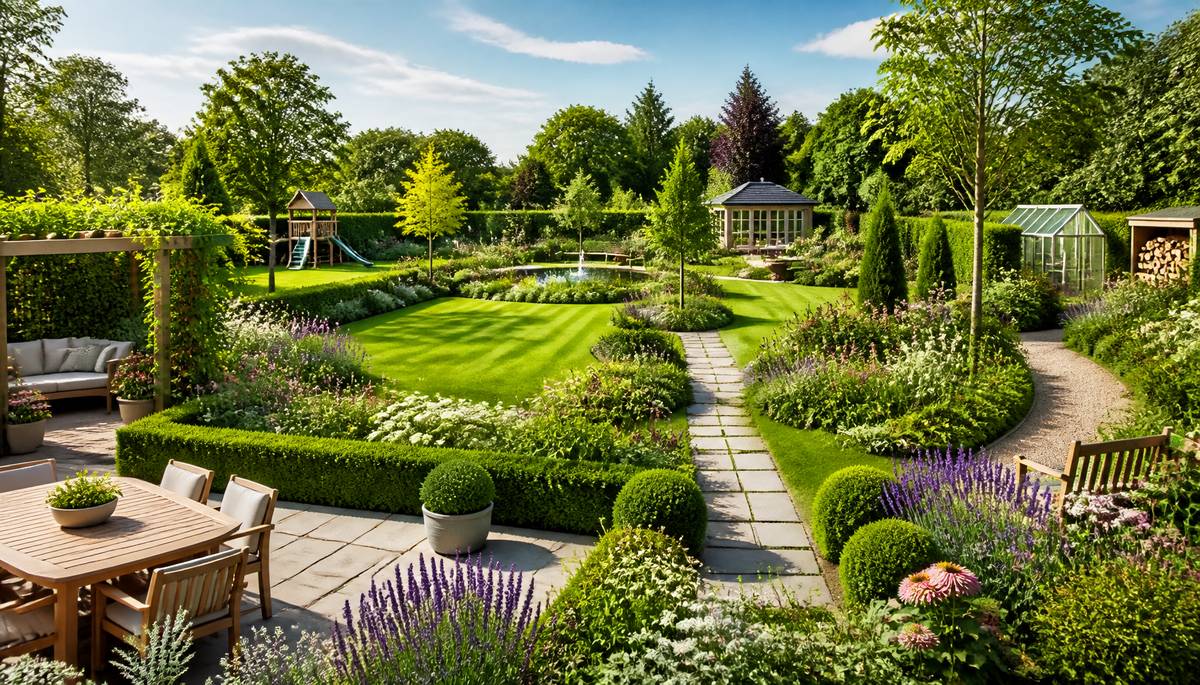 A large garden should feel like a gift. Space to spread out, room for different activities, potential for creating something special. But many homeowners with generous plots find the opposite happens. The garden feels directionless. Empty patches appear between scattered features. Maintenance becomes overwhelming.
The problem is not the size. It is the lack of structure. Without a clear plan, large gardens become collections of separate ideas rather than cohesive spaces. You need to think differently about design when you have significant ground to work with.
Why Large Gardens Often Feel Disconnected
Most garden design advice focuses on small spaces. How to make them feel bigger, how to fit everything in, how to create the illusion of depth. When you have actual space, those tricks don't help.
Large gardens fail when owners treat them like oversized versions of small plots. They install a patio near the house, put a shed at the back, and fill the middle with lawn. The result? Three separate elements with no relationship to each other.
You walk out and see grass. Lots of grass. Maybe some borders around the edges. But nothing draws you into space. Nothing suggests where to go or what to do. The garden becomes something you look at rather than something you use.
This is where professional large garden design makes a real difference. Specialists in handling bigger plots understand how to create structure that gives each area purpose while maintaining flow between zones.
Create Clear Zones for Different Activities
The first step in making a large garden purposeful is dividing it into zones. Not random sections, but areas designed for specific uses.
Think about how you want to use your outdoor space. Do you entertain regularly? Need somewhere for children to play? Want a quiet spot to read? Room for growing vegetables? A large plot can accommodate all of these, but only if you plan for them deliberately.
Position your social zone near the house. This is your main patio or deck, sized properly for the furniture you actually want to use. Too many patios end up too small because homeowners underestimate space requirements. A dining table for six needs at least four metres square to avoid chairs bumping into planters every time someone stands up.
Place a quiet zone away from the main activity area. This might be a bench surrounded by planting, a small pergola with seating, or even a simple clearing in the garden with a chair. The key is separation. When you sit here, you should not be watching people on the patio or hearing traffic from the road.
If you have children, dedicate an area to play. Keep it visible from the house so you can supervise easily. Lawns work well for younger children. Older kids might want hard surfaces for basketball or space for goal posts. Remember this zone will evolve as your family grows, so avoid permanent structures that lock you into one use.
Every garden needs a utility zone. Somewhere for bins, compost, tool storage, and possibly a greenhouse or shed. Most people try to hide this area, which makes sense visually but creates problems practically. You need easy access. Screen it with hedging, trellis with climbers, or a simple fence, but make sure you can reach it without walking through other zones.
Use Pathways to Connect Everything
Zones only work if you can move between them naturally. This is where pathways become critical.
Large gardens need more than one path. A single route from house to shed creates a utilitarian feeling. Multiple paths suggest exploration and give you choices about how to experience the space.
Your main path should be wide enough for two people to walk side by side. That is about 1.5 metres minimum. Use durable materials like stone, gravel, or block paving. This path connects your primary zones and gets the most use.
Secondary paths can be narrower and more informal. Stepping stones through planting, bark chip trails, or mown grass routes all work. These paths invite you to explore quieter corners and create a sense of discovery as you walk the garden.
Think about sight lines when planning paths. A path that curves out of view suggests there is something worth discovering beyond the bend. A straight path shows you everything at once and removes mystery. According to the Royal Horticultural Society, curved pathways make gardens feel larger and more interesting than straight routes of the same length.
Where paths intersect or widen, create decision points. A bench, a planted urn, or a small tree signals this is somewhere to pause and choose your direction. These moments break up the journey and stop the garden feeling like a march from A to B.
Add Structure with Hedges and Screening
Open views across an entire large garden rarely work well. Everything is visible at once, which removes any sense of progression or surprise.
Internal hedging solves this. You don't need solid barriers between zones. Low hedges at knee height, taller hedges at chest height, or mixed planting that partially obscures views all work better than leaving everything open.
This screening serves multiple purposes. It divides the garden into distinct areas without completely separating them. It creates shelter from wind. It provides privacy from neighbours. And it gives you control over what visitors see as they move through the space.
Evergreen hedging maintains structure year-round. Yew, box, and holly all thrive in UK conditions and can be shaped to suit your design. For faster growth, consider laurel or privet, though these need more frequent trimming.
Deciduous hedging like beech or hornbeam offers seasonal interest. The leaves turn copper in autumn and often persist through winter before fresh growth appears in spring. These hedges work well for internal divisions where year-round privacy is not essential.
Mixed native hedging brings wildlife benefits. Hawthorn, blackthorn, and field maple together create dense screening, support insects and birds, and look more natural than uniform hedges. This approach particularly suits rural or cottage-style gardens.
Plant at Scale
Small gardens need careful plant selection to avoid overcrowding. Large gardens need the opposite approach. Planting at scale creates impact that individual specimens cannot achieve.
Groups of the same plant repeated through borders create rhythm and cohesion. Instead of one lavender, plant twenty in a drift. Instead of three grasses dotted about, plant blocks of seven or nine.
This repetition ties different areas together visually. When you use the same plants in multiple zones, the garden feels coordinated rather than random. It also simplifies maintenance because you are caring for fewer species overall.
Trees matter enormously in large gardens. You have room for specimens that would overwhelm smaller plots. Mature trees provide height, shade, seasonal interest, and structure. They take years to grow, so plant them early in your design process.
Consider the mature size carefully. A tree that looks perfect at five years old might dominate the garden at twenty years.
Research growth rates and ultimate dimensions before planting. The Forestry Commission provides detailed information on tree species suitable for UK gardens.
In larger borders, layer your planting. Tall perennials or shrubs at the back, medium height plants in the middle, and low growing species at the front. This creates depth and ensures everything is visible rather than hidden behind taller plants.
Include a Focal Point That Anchors the Design
Every large garden benefits from a strong focal point. Something that draws the eye and gives the design a centre of gravity.
This might be a substantial water feature, a fire pit area, a striking tree, a summer house, or a piece of sculpture. Whatever you choose, it needs sufficient scale to work in a large space. Features that look impressive in a small garden can disappear in a bigger plot.
Position your focal point at a key sight line. When someone stands on your main patio looking into the garden, their eye should naturally land on this feature. This creates immediate interest and encourages exploration.
The focal point does not have to be in the centre of the garden. Often it works better positioned to one side or at the far end. This arrangement creates a journey towards the feature rather than making everything visible immediately.
If your garden includes seating areas beyond the main patio, each can have its own focal point. A water bowl, a specimen shrub, or a planted urn all work at this smaller scale. These secondary focal points support the main feature without competing with it.
Make Lawn Areas Functional or Remove Them
Large lawns look great in photographs but often serve no real purpose. If you are not using the grass for play, picnics, or walking routes, question whether you need it.
Lawn requires regular maintenance. Mowing, feeding, aerating, and edging take time every week through the growing season. In a large garden, this can mean several hours weekly just to keep grass looking acceptable.
If you do want lawn, give it a defined role. Shape it deliberately rather than filling all available space. A circular lawn creates a sense of enclosure. A long rectangular lawn suggests a vista. Curves add movement and interest.
Reduce lawn in areas where it struggles. Grass under trees rarely thrives. Shaded lawn becomes muddy and moss-covered.
Replace these patches with shade-tolerant planting or bark chip. You will save maintenance time and the garden will look better.
Consider alternative ground covers for areas that need coverage but don't require regular access. Creeping thyme, chamomile, or clover all stay low and cope with occasional foot traffic. They require far less maintenance than grass and provide interest when flowering.
Plan for Seasonal Interest Throughout the Year
Small gardens can rely on a few star performers through peak months. Large gardens need something happening in every season.
Spring bulbs provide early colour before perennials emerge. Plant them in large drifts under deciduous trees or through borders. Hundreds of bulbs create impact that dozens cannot match.
Summer is easy. Most plants look their best from June through August. But what about the other nine months?
Choose shrubs with good autumn colour. Many dogwoods, acers, and viburnums provide brilliant reds, oranges, and purples as temperatures drop. Position these where low autumn sun will light them up.
Winter structure comes from evergreens, seed heads, and bark. Leave ornamental grasses standing through winter rather than cutting them back in autumn. The dried foliage and seed heads look striking in frost and low light.
Consider planting winter-flowering shrubs in areas you walk past regularly. Witch hazel, winter jasmine, and mahonia all flower in the coldest months and provide fragrance when nothing else does.
Get Professional Input Before You Start
Large garden redesigns involve significant investment in time, money, and materials. Mistakes at this scale are expensive to correct.
Professional designers understand how to balance different zones, choose appropriate materials, and create layouts that work long term. They can identify drainage issues, spot opportunities you might miss, and suggest solutions based on experience with similar plots.
Many homeowners start DIY, realise the complexity, and then call professionals to fix problems. This always costs more than doing it properly from the beginning.
A good designer will visit your site, understand your requirements, and produce scaled plans showing exactly how the garden will look and function. You can see the proportions, relationships between zones, and how the design addresses your specific challenges before any construction begins.
Construction expertise matters too. Building retaining walls, installing drainage, laying large patios, and planting trees all require proper technique. Poor workmanship leads to failures that may not appear for several years but will need expensive remediation eventually.
Making Your Large Garden Work for You
A purposeful large garden does not happen by accident. It requires structured thinking about zones, careful planning of routes, appropriate planting at scale, and enough focal points to create interest without clutter.
The reward is a space you actually use. Different areas for different moods and activities. Pathways that invite exploration. Planting that looks intentional through every season. A garden that feels complete rather than half-finished.
If you are looking at your large plot and wondering where to start, professional help transforms the process. Designers who specialise in bigger gardens understand the specific challenges and opportunities that come with space. They can turn that overwhelming blank canvas into a structured, purposeful outdoor room that enhances your home and your life.
Start with a clear vision of how you want to use the space. Work with professionals who understand large-scale design. Build properly with quality materials. Plant thoughtfully for long-term effect. The result will be a garden that feels purposeful, complete, and genuinely yours.
|
|

