Space-Saving Secrets: How Sliding Doors Can Transform Tiny Rooms into Functional Living Areassubmitted on 17 December 2025
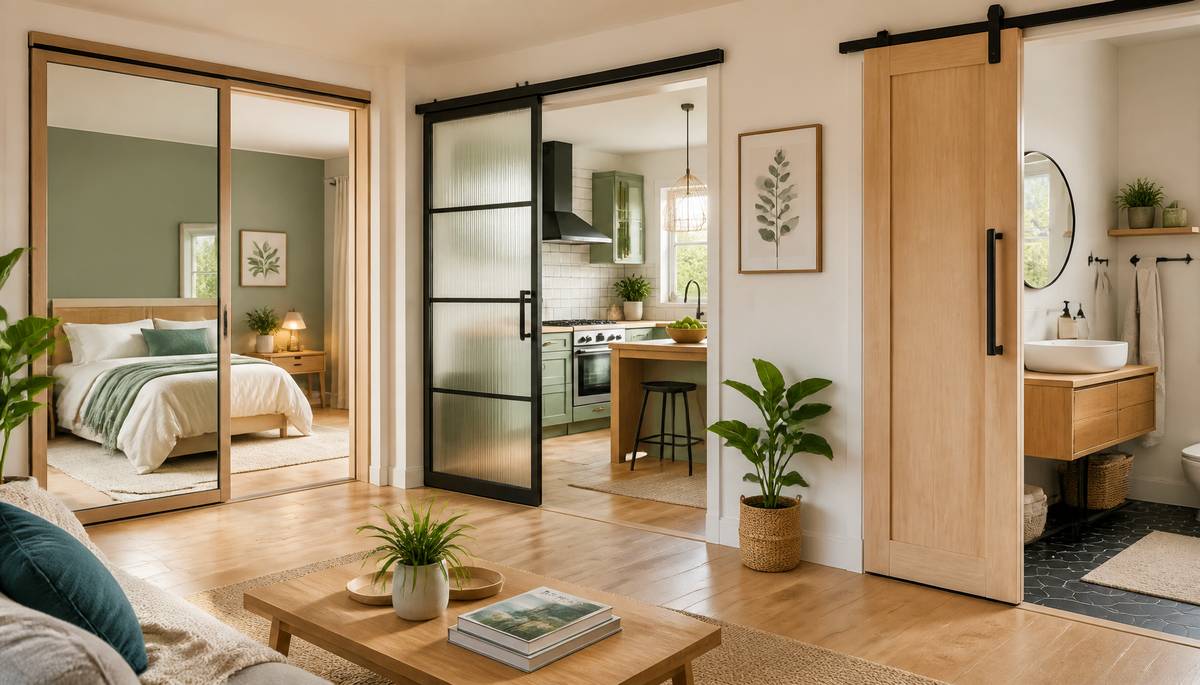 A small room has a way of exposing every design mistake you hoped no one would notice. Chairs block drawers, doors argue with furniture, and walking from one side to the other feels like solving a mild puzzle. Near the top of any sensible fix list sits the sliding-door, quietly waiting to solve problems without asking for applause.
Traditional doors insist on claiming territory every time they open. They swing wide, demand respect, and treat floor space like a suggestion. Sliding doors, by contrast, behave more like polite guests. They move laterally, stay contained, and don’t force the room to rearrange itself around their needs. In compact homes, that difference is not cosmetic; it’s structural.
When Door Clearance Becomes the Real Enemy
Swing clearance is one of those design issues people underestimate until it’s too late. A standard hinged door can render a corner useless, prevent furniture from sitting flush against a wall, or block natural movement through a room. Multiply that by several doors in a small home and suddenly the square footage feels smaller than it actually is.
Sliding doors remove that constraint entirely. The space once reserved for a door’s arc becomes usable again, and that reclaimed area can support real function. A desk fits where it never could. Storage finally aligns with walls. Walkways stop feeling like obstacle courses.
This is not a stylistic argument. It is a spatial one. Sliding doors allow rooms to work as intended rather than as compromised versions of better plans.
Bedrooms That Stop Fighting Back
Bedrooms in smaller homes often operate under quiet stress. Beds dominate, wardrobes compete, and circulation space is treated like a luxury item. Sliding doors ease that tension immediately.
Wardrobe doors that slide rather than swing allow beds to sit closer without sacrificing access. This makes layouts more flexible and reduces the sense that the room is permanently mid-rearrangement. Lighter finishes or mirrored panels can also help reflect light, giving the impression of depth without pretending the room has grown overnight.
Entry doors benefit just as much. Replacing a hinged bedroom door with a sliding alternative can free wall space for shelving or lighting, or simply allow the bed to be positioned where it makes sense ergonomically rather than where hinges allow.
Kitchens That Move Like They Mean It
Small kitchens demand efficiency. Every movement matters, and every obstruction is felt immediately. Sliding doors between kitchens and adjoining spaces offer control without congestion.
They allow separation when needed and openness when not, all without stealing valuable floor area. This matters during busy moments, when multiple people and hot surfaces are involved and spatial clarity becomes a safety feature rather than a preference.
- Clearer circulation paths
- More flexibility in cabinet placement
- Reduced collision risk in tight layouts
Some design choices aim to impress. Others aim to function. Sliding doors belong firmly in the second category, which is often where the smartest decisions live.
Bathrooms That Feel Less Like Negotiations
Bathrooms are where poor door choices are most aggressively exposed. There is something uniquely humbling about trying to close a door while simultaneously avoiding a sink, a towel rail, and your own knees. In compact bathrooms, sliding doors remove this awkward geometry entirely.
A sliding door allows fixtures to be placed where they function best rather than where the door politely permits them. Vanities can be wider, storage can be taller, and movement becomes straightforward. Pocket-style sliders are especially effective here, though surface-mounted options can work just as well when walls refuse to cooperate.
This is also a space where privacy matters. Sliding doors seal a room cleanly without demanding space in return. That exchange is hard to beat.
Light, Lines, and the Illusion of Space
One of the quiet strengths of sliding doors is their ability to support visual continuity. When doors glide rather than swing, sightlines remain intact. This makes small homes feel more open, even when rooms are clearly defined.
Glass or partially glazed panels allow light to travel further into the home, reducing the boxed-in feeling that small rooms often suffer from. Even solid panels benefit from the uninterrupted wall lines that sliding systems create. The eye moves more freely, and the room feels calmer as a result.
There is a subtle confidence in a space that doesn’t constantly remind you where its boundaries are. Sliding doors help establish that tone.
Multi-Use Rooms That Actually Multitask
In many compact homes, rooms must perform double or even triple duty. Home offices become guest rooms. Dining areas moonlight as workspaces. Sliding doors make these transitions smoother.
By allowing rooms to be opened or closed without rearranging furniture, sliding doors support flexible living. A workspace can be visually separated during the day and folded back into the home at night. Noise can be managed without building permanent walls. Privacy becomes optional rather than all-or-nothing.
This adaptability is not just convenient. It extends the usable life of a space as needs change, which is especially valuable when moving walls is not an option.
Let That Space Slide
Small rooms don’t need grand gestures. They need intelligent ones. Sliding doors solve a problem that most people accept as inevitable, and they do it quietly, efficiently, and with very little fuss.
By removing swing clearance, improving flow, and supporting flexible layouts, sliding doors give compact homes room to breathe without pretending they are something they’re not. Sometimes the smartest way forward is sideways.
|

