The Postpods Guide to Flower Beetle Husbandry: Raising Healthy Larvae to Active Adults
Flower beetles (Cetoniinae) are some of the brightest and liveliest insects you will see in this hobby. Many people feel proud to keep them. To do well with these beetles for a long time, you need to remember something important about their life. Taking care of the young beetle (larvae) and taking care of the adult beetle are not the same, even though they are both part of one life cycle. You have to work on both to have good results.
The main thing that shapes the adult size, shell color, and how long they live is the food and moisture in what the larvae eat, not what the adult beetle gets as food. It is better to buy healthy beetles from vendors with a good name who offer beetle larvae for sale. This gives you a good start. With this, you can handle how the substrate changes, how fast the beetles grow, and when they change into adults.
Understanding Cetoniinae Larval Development
Flower beetle grubs go through three larval stages. These are called L1, L2, and L3. After that, they form a pupal cell. In each of these phases, the grub keeps eating. It eats fermented hardwood sawdust, which people call flake soil. The grub also eats decayed leaf litter during this time.
| Stage | Duration | Notes |
|---|
| L1 Instar | Hatch – 4 Weeks | Small grubs establish feeding |
| L2 Instar | Weeks 4 – 8 | Rapid growth and substrate consumption |
| L3 Instar | Months 2 – 6 | Peak size reached before cell building |
| Pupation | In Earthen Cell | Transformation into pre-adult |
| Emergence | In Cocoon | Hardening inside protective cell |
| Active Adult | Months 3 – 8 | Reproduction, flight, and active feeding |
As the larvae eat the substrate, they change the old matter into small oval droppings called frass. When most of the substrate turns into frass, there is less food left. At this time, the larvae will turn into small grown insects sooner than expected. People who use the Postpods way of caring look at the substrate every two weeks. They take out 70% of the used-up soil and put in new, airy flake soil. They keep 30% of the old substrate so the good gut bacteria stay in the system.
Substrate Selection and Fermentation Metrics
The substrate is more than just bedding. It is the main source of food for larval growth. Raw wood or softwood sawdust has toxic resins and unrefined lignin. These can cause deadly blockages in the gut of Cetoniinae larvae.
Flake soil goes through hot aerobic fermentation. During this time, small micro-organisms break down hard lignin into easy-to-digest cellulose. They also make proteins that mushrooms need.
It is important to keep the right amount of moisture in the mix. You can check this by using the hand-squeeze test. Take some of the mix and squeeze it tight. It should hold together in a clump, but no water should drip out.
| Substrate Parameter | Ideal Target Metric | Primary Failure Risk |
|---|
| Moisture Content | 50% – 60% (Should feel solid when you squeeze it) | No air in the mix if there's too much water; dries out the grubs if it's too dry |
| Fermentation Stage | One-time fermented (Dark brown, smells like soil) | May get too hot or make gas if there's unfermented wood |
| Hardwood Origin | 100% from broadleaf trees (Oak, Beech) | Can be harmful or block up the gut if you use pines or other softwoods |
| Temperature | 22°C – 26°C (71.6°F – 78.8°F) | Stops young bugs from growing below 18°C; many die if it's above 29°C |
The material set up for Postpods enclosures goes through a required 48-hour freeze before it can be used. This step gets rid of pest grain bugs but does not hurt the base organic mix.
Managing the Critical Pupation Window
At the end of the L3 stage, the larvae stop eating. They clean out their stomachs and turn a deep yellow-cream color. The grub then makes an earthen pupal cell, or cocoon, by sticking together bits of the ground using stuff from its own body.
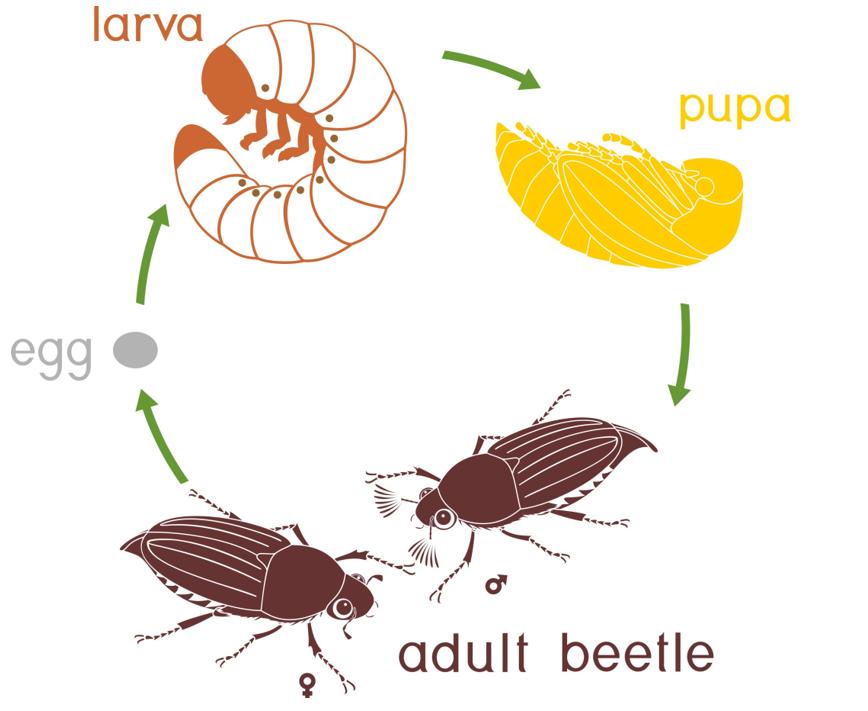
Bumping or shaking the container when a beetle is building its cell is the main reason why pupae do not survive. Loose bedding that gets moved can break the fragile walls of the chamber. This can trap the growing beetle inside. People who take care of the beetles need to keep the moisture level steady by spraying a little water on the top. They should not soak the deeper layers because that is where most cells are made.
Adult Enclosure Architecture and Nutrition
When adults come out of their cocoons, they stay still inside the cell for 2 to 4 weeks. During this time, their outer skin and flight muscles get strong and ready. When they dig out to the surface, their care changes. They now need good airflow, things to climb on, and food with a lot of sugar.
Substrate Depth: Spread about 8 to 10 cm of damp leaf litter or soil. This will give space for egg-laying and places for beetles to rest.
Climbing Anchor Points: Put cork bark, dry oak branches, and wood perches around the top. If beetles fall on smooth areas and can't grab anything, they can get tired very fast.
Dietary Carbohydrates: Give your beetles store-bought beetle jelly or soft fruits that are not citrus, like ripe banana and mango. Change out pieces of raw fruit every two days so fruit flies do not show up.
Illumination & Heat: Keep lights on for 12 hours a day with a soft 20W daylight LED or halogen spotlight outside the home to help the beetles be more active and to help with flight and mating.
Using a strong african fruit beetle care guide helps adult groups stay active at a high level. They keep laying eggs into the bottom layer so the colony can keep going.
Troubleshooting Common Husbandry Failures
Keeping the best environment means you need to see early warning signs before the colony’s health gets worse.
Larvae Surface Wandering: If you see grubs keep going up to the surface, it means that the bedding may not have enough food left, might be too wet, or could be giving off ammonia because the breakdown of food is not done right.
Mite Infestation Outbreaks: If you see white grain mites on the larva, it means some areas have too much water, and the air is not moving well. Take the grubs out, clean them softly with a wet brush, and put them in new bedding that has more air.
Malformed Adult Wings (Elytra Deformities): Adult beetles can get bent wings if the pupa shell drops flat down on itself or if it is not humid enough in the last stage before the beetle comes out of the cocoon.
When you get healthy starting stock from trusted suppliers who offer healthy beetle larvae for sale, you make sure that the larvae have strong genes. This also helps cut down the risk of problems from disease when you start.
FAQs
When should I know that my flower beetle larvae need a new substrate?
Check the substrate on the bottom of the container every two weeks. Whenever over 60 percent of the substrate gets turned into small hard feces (frass), do a 70% substrate change.
Can I house my flower beetle larvae together in the same container?
Yes, most Cetoniinae beetles, including Pachnoda, can be raised together when sufficient space is available. Predatory or aggressive species must be raised individually in separate deli cups.
What is the lifespan of a flower beetle from egg to adult?
The lifespan from egg to adult takes between 5 and 9 months based on ambient temperature, after which the adult will live between 3 and 8 months.
Why are my adult beetles staying buried in the substrate?
Just like other beetle species, adult beetles stay buried underground for several days because they enter the obligatory post-emergence dormancy.
Is fresh fruit better than beetle jelly for my adult beetles?
Beetle jelly is preferable for maintaining the adults for longer periods due to its balanced nutrient composition and longer shelf life compared to fresh fruit.
Essential Colony Management Protocols
Taking care of flower beetles means knowing what each stage of their life needs. You need to use good, pest-free hardwood for young grubs to eat. For adult beetles, make sure their homes have fresh air and are well set up. If you do these things, you can raise many healthy flower beetles. Watching the pupa stage closely will help more beetles break out. This makes caring for larvae more fun and something you can keep doing over time.

|
|

