Everything You Need to Know About Pallets Before You Use Them at Home
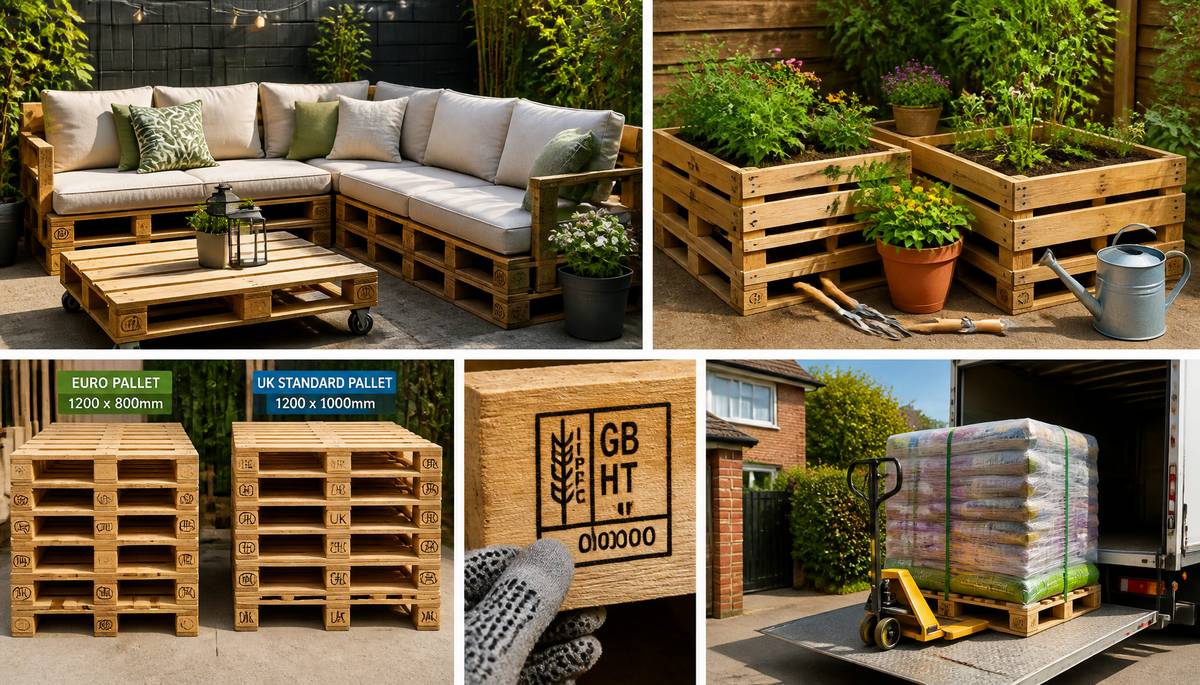 Pallets can be useful materials for home and garden projects, from storage to planters. Their suitability depends on their condition, construction, ownership and what they have carried. Treat reclaimed timber as a material to assess, rather than assuming every pallet is safe or strong enough for a new purpose.
But not all pallets are the same size, and that matters more than most people realise. If you are sourcing pallets for a specific project, buying garden furniture made from them, or arranging delivery of bulky goods to your home, understanding standard UK pallet sizes will save you time and prevent some frustrating surprises.
The Sizes You Will Actually Encounter
Two common pallet footprints are the Euro pallet at 1200mm x 800mm and the UK standard pallet at 1200mm x 1000mm. Both appear in supply chains, so measure the pallets you are actually buying or collecting.
The UK standard pallet is 200mm wider than the Euro format. That difference affects project dimensions, storage space and delivery access. Neither footprint tells you the pallet's condition or its safe load capacity.
Physical half-Euro pallets can measure 600mm x 800mm. However, a carrier's 'half pallet' delivery category may use the same footprint as a full pallet with a lower height and weight allowance. Check whether a supplier is describing the wooden platform or the freight tariff.
Other footprints and constructions are available. 'Block pallet' describes a type of construction, not a single size, so ask for dimensions rather than relying on the name alone.
Why Size Matters for Garden and Home Projects
For a raised bed or planter, calculate the finished internal dimensions from the design and the timber you will use. A pallet's external width does not automatically become the bed's usable planting depth. Make sure any material used around edible crops is suitable for that purpose and has a known history.
For garden sofas and seating, most plans and tutorials you find online are based on Euro pallet dimensions. If you source UK standard pallets instead, the proportions will be off and cushions or covers designed for Euro pallet furniture will not fit. Worth checking before you collect a van load.
Storage shelving built from pallets is another area where size consistency matters. Mixing Euro and UK standard pallets in the same shelving run creates uneven surfaces and misaligned uprights. If you are using pallets for workshop or garage storage, stick to one size throughout.
Sourcing Pallets for Home Projects
Ask local businesses or pallet suppliers whether they have pallets they own and are willing to release. Always obtain permission before taking one; pallets at loading bays may belong to a pooling company or be awaiting return.
An IPPC treatment mark gives information about phytosanitary treatment. HT indicates heat treatment, but it does not certify that a pallet is clean, free from chemical contamination or suitable for furniture or food-growing uses. Avoid methyl-bromide-treated pallets marked MB and pallets with an unknown or unsuitable history.
Inspect for broken boards, protruding nails, missing blocks, staining and odours. Reject damaged or suspect pallets. A clean appearance alone cannot establish what a pallet has carried; for sensitive uses, choose timber with a verified, suitable history.
Pallets and Home Deliveries
Understanding pallet sizes is also useful when you are on the receiving end. Many large home and garden orders arrive on pallets, including paving slabs, decking materials, bagged aggregates, compost in bulk, garden buildings, and outdoor furniture sets.
Confirm delivery arrangements before ordering. Tail-lift unloading must be booked where needed, and the carrier may only offer kerbside delivery. Pallet trucks need suitable firm, level access; steps, gravel, slopes and narrow gates can prevent onward movement.
Most pallet delivery services will note this on booking, but it is worth thinking through your access before your order arrives. Knowing whether your delivery is on a Euro pallet or a UK standard pallet tells you roughly what you are dealing with in terms of footprint, which affects where you can ask the driver to place it.
Ask the supplier for the loaded footprint, total height and gross weight, including packaging and the pallet. These measurements are more useful for planning access than a generic description such as 'standard pallet'.
Using Pallets When Moving House
If you are using a storage or removal service, ask how your belongings will be packed, supported and protected from moisture. Providers use different systems, and a pallet alone is not a guarantee against damage or damp.
For a DIY move, follow the vehicle hire company's loading guidance. Check payload and load restraint requirements, and use appropriate protection for furniture. Do not assume that pallets fit a particular van or that they make an unsecured load safe.
For large deliveries arriving as part of a move, the same considerations apply as for any pallet delivery. Check your access, know the pallet size, and make sure you have a clear path for a pallet truck if the driver needs to move goods from the kerbside.
Repurposing Pallets Responsibly
Check ownership and return obligations before cutting up or disposing of a pallet. Branded pooling pallets may remain the pooling company's property. Euro markings alone do not tell you that a pallet is free to take or that a particular deposit arrangement applies.
For pallets you own and can legitimately pass on, reuse groups or a pallet recycler may be useful options. Describe their condition and history honestly. If the timber is unsuitable for reuse, check the local waste facility's acceptance rules.
Pallets are one of the most genuinely useful free materials available for home and garden projects. Knowing the sizes before you start means your project goes together as planned rather than requiring improvisation once the wood is in your driveway.
|
|

