Waterproof, Water-Resistant and Water-Tolerant: What Those Flooring Claims Really Mean in Everyday Life
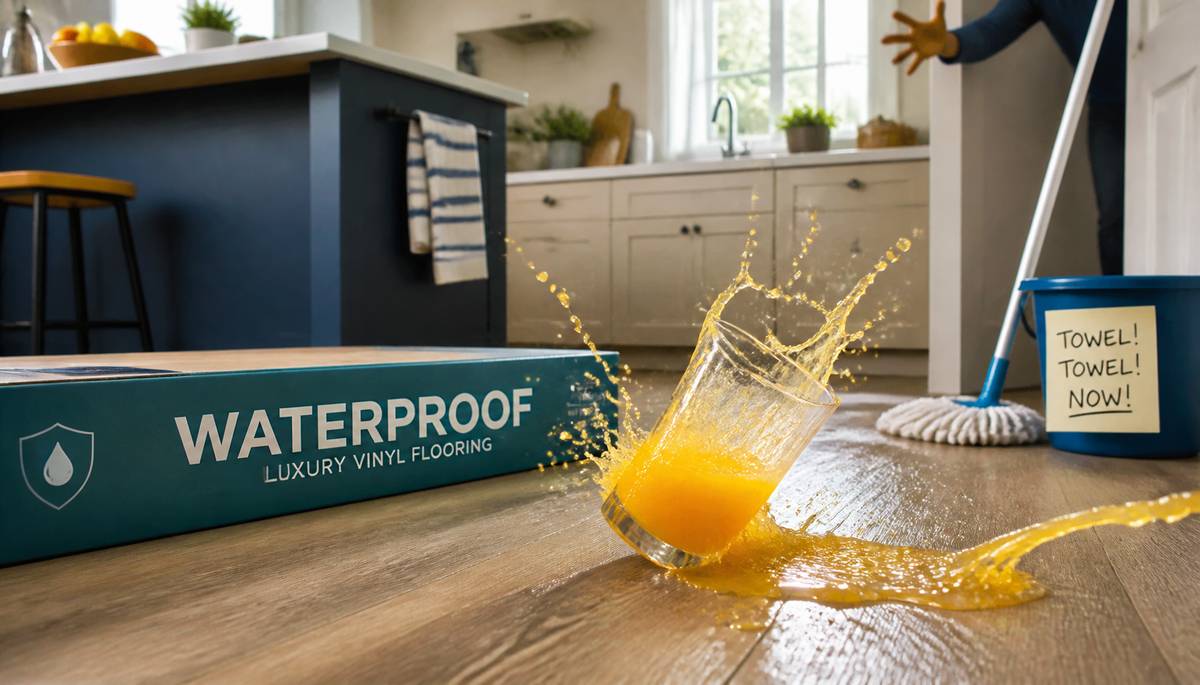 A glass of orange juice hits the floor, somebody shouts for a towel, and suddenly the word “waterproof” printed on the flooring box is being subjected to considerably more legal scrutiny than anyone expected.
Flooring terminology can sound reassuringly absolute. Waterproof suggests immunity. Water-resistant sounds nearly as comforting, while water-tolerant implies that the floor will at least behave sensibly when confronted by a wet umbrella. In everyday homes, however, the important questions are not simply whether water reaches the floor, but how much arrives, where it travels and how long it remains there.
Understanding those distinctions can help homeowners respond appropriately to ordinary spills while recognising situations where a mop and optimism may not be enough.
Waterproof Does Not Mean Invincible
A genuinely waterproof flooring material should not absorb water or suffer structural damage simply because it becomes wet. Certain vinyl and rigid-core flooring products, for example, can offer extremely strong protection against moisture.
But a waterproof plank does not automatically create a waterproof room. Water can still travel through joints, around perimeter gaps, beneath skirting boards and into the subfloor. It may also reach adhesives, underlay or neighbouring materials that have considerably less enthusiasm for swimming.
Imagine a washing machine develops a slow leak overnight. The visible flooring might survive perfectly well while water quietly spreads underneath it for several hours. By breakfast, the washing machine has effectively opened its own underground reservoir.
That distinction matters because manufacturers' moisture claims generally describe the flooring product and its tested performance. They should not be interpreted as permission to leave standing water indefinitely.
Water Resistance Buys Time
Water-resistant flooring is better understood as flooring capable of resisting moisture for a particular degree or duration of exposure. It may cope extremely well with the incidents that happen during ordinary domestic life.
Spill a drink and wipe it up promptly? Usually straightforward. Walk across the hallway wearing wet shoes? Again, that is the sort of brief exposure many suitable floors are designed to handle. A few splashes escaping from a sink are quite different from discovering that the dishwasher has spent six hours quietly recreating the Norfolk Broads.
Time therefore becomes an important part of the equation. Water sitting on joints can eventually find routes into the flooring structure. With laminate in particular, moisture reaching a vulnerable fibreboard core can cause swelling, raised edges or distortion that does not simply disappear when the surface dries.
Water-Tolerant Is a Useful Way to Think
“Water-tolerant” is not always a formal product category, but it is a useful practical concept. Instead of asking whether a floor is waterproof in some abstract sense, ask what sort of wetness it can realistically tolerate.
A kitchen experiences dropped drinks, damp mops and occasional splashes. An entrance hall receives wet footwear and dripping coats. Bathrooms create repeated moisture around baths, showers and sinks. Utility rooms add another possibility entirely: appliances containing enough water to turn a minor mechanical failure into an indoor weather event.
Those environments impose different demands. Choosing flooring therefore means thinking beyond the reassuring label on the packaging and considering what water is actually likely to do once real people start living on it.
A Splash and a Flood Are Different Problems
The quantity of water matters just as much as the flooring specification. A tablespoon of water dropped beside the kitchen sink presents a very different challenge from several litres escaping from a refrigerator supply line.
Small spills tend to remain visible and accessible. They can be wiped away before they travel far. Larger leaks behave differently. Water follows tiny slopes, enters expansion gaps, runs beneath cabinets and finds openings that nobody knew existed. The floor may look surprisingly respectable while something considerably less respectable is happening underneath it.
This is why the visible condition of the surface should not always determine the response. After a substantial leak, checking surrounding skirting, thresholds and adjoining rooms can reveal how far moisture has travelled. Where significant water may have reached beneath the flooring, professional moisture testing or temporarily lifting accessible boards may be worthwhile.
Overnight Changes the Equation
Duration can transform an insignificant spill into genuine damage. Water wiped from a resistant floor within minutes may leave no trace whatsoever. The same amount left against joints for many hours has much more opportunity to penetrate vulnerable areas.
Consider wet shoes abandoned near the front door. The small amount of moisture beneath them will probably dry without incident. Now imagine a leaking plant pot sitting unnoticed in exactly the same place for three days. The floor has not suddenly become defective; it has simply been subjected to a completely different type of exposure.
Bathrooms provide another good example. Occasional splashes are one thing. Repeatedly leaving puddles around the bath after every use means the same joints and edges are exposed again and again. Eventually, even relatively small amounts of moisture can matter.
Installation Matters More Than the Label Suggests
Excellent flooring can perform poorly if it has been badly installed. Expansion gaps, sealed edges, appropriate underlay and careful treatment around pipes and doorways all influence how a finished floor responds to moisture.
The subfloor matters too. Water that passes beneath a waterproof surface may become trapped, particularly when evaporation is difficult. Persistent moisture can affect timber components and encourage mould growth. That makes substantial leaks a building issue rather than merely a question of whether the decorative surface still looks attractive.
Manufacturer instructions should therefore be treated as part of the flooring system rather than optional bedtime reading for people who have exhausted every other form of entertainment. Requirements concerning installation, permitted rooms, cleaning and standing water can affect both performance and warranty coverage.
Don't Let Your Flooring Get in Over Its Depth
The most useful approach is to treat terms such as waterproof and water-resistant as descriptions of capability rather than magical force fields. They can indicate excellent protection, but they do not abolish the ordinary physics of water.
Clean up spills promptly, avoid allowing puddles to remain unnecessarily, investigate unexplained dampness and take larger appliance leaks seriously. After substantial water exposure, remember that what cannot be seen may be more important than the surface that can.
Good flooring should make everyday life easier. Nobody needs to sprint across the kitchen because three raindrops have fallen from a coat, nor should a spilled cup of tea require the evacuation of the ground floor. The sensible middle ground is simply to match the response to the exposure. A splash is a splash; a flood is a flood; and “waterproof” was never intended to turn the living room into a municipal swimming pool.
|
|

