How Dirty Carpet Affects Indoor Air Quality
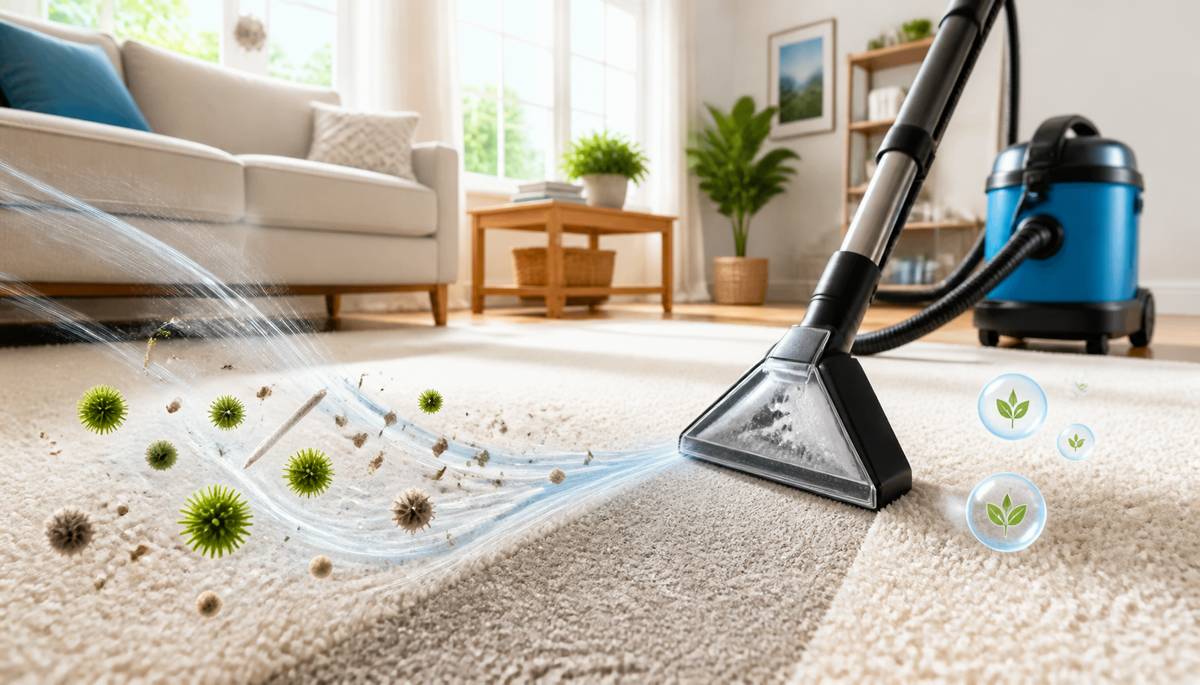 Most people think of carpet as a surface you walk on, not something that affects the air you breathe. But carpet functions a lot like a filter for a home, trapping dust, allergens, and particles that would otherwise circulate freely through the air. That's a good thing when the carpet is clean and well maintained. When it isn't, that same trapping ability starts working against the air quality in your home rather than for it.
Carpet fibers hold onto far more than what's visible on the surface, and over time, everything they've absorbed can start affecting the air circulating through your living space. Regular carpet cleaning helps release that trapped material before it becomes a genuine air quality concern rather than just a cosmetic one.
Here's what's actually accumulating in carpet over time, and how it affects the air in your home.
Dust and allergens build up deep in the fibers
Carpet fibers are remarkably effective at capturing airborne dust, pollen, pet dander, and other allergens as they settle out of the air. This is useful in small amounts, since it keeps particles out of the air you're breathing, but as buildup increases over months and years without deep cleaning, foot traffic and everyday activity can stir these particles back into the air. For anyone with allergies or asthma, this can mean ongoing exposure to triggers that would otherwise have been removed through regular deep cleaning.
Dust mites thrive in uncleaned carpet
Dust mites feed on the organic material that naturally collects in carpet fibers, including skin cells and other debris, and they multiply readily in the warm, protected environment carpet provides. Dust mite waste is a well-documented allergen and asthma trigger, and it tends to accumulate specifically in carpets that don't receive regular deep cleaning, since surface vacuuming alone doesn't fully address the deeper layers where mites live and reproduce.
Mold and mildew can develop in damp conditions
Carpet that's been exposed to moisture, whether from spills, humidity, or a past leak, creates conditions where mold and mildew can develop, particularly in the padding beneath the surface where dampness lingers longest. Mold spores released into the air can cause respiratory irritation and, for sensitive individuals, more serious health concerns. This is one of the reasons prompt attention to any water exposure in carpeted areas matters so much, since visible drying on the surface doesn't always mean the padding below has fully dried out.
Volatile organic compounds and trapped chemicals
Carpet can also trap volatile organic compounds, or VOCs, released by cleaning products, off-gassing from carpet materials, and other household chemicals. Over time, these compounds can settle into carpet fibers and gradually release back into indoor air, contributing to indoor air quality issues that aren't always obvious without specific testing. Regular deep cleaning helps reduce this reservoir effect, particularly when paired with cleaning methods that fully extract residue rather than simply masking it.
Pet dander and odor accumulation
Households with pets often see faster buildup of dander, hair, and odor-causing bacteria within carpet fibers, all of which affect indoor air quality over time. Pet dander in particular is a common allergen, and carpet's ability to hold onto it means these particles can remain airborne-adjacent long after a pet has left the room, continuing to affect anyone sensitive to that specific allergen.
Why vacuuming alone isn't enough
Regular vacuuming is an important part of carpet maintenance, but standard vacuums typically only address the surface layer of a carpet, leaving deeper accumulated debris largely untouched. Professional deep cleaning methods, particularly hot water extraction, reach further into the fibers and padding, removing material that regular vacuuming simply isn't equipped to lift out.
Signs your carpet may be affecting your air quality
Certain signs are worth paying attention to, including a persistent musty smell, increased allergy symptoms specifically at home, visible discoloration or staining, or a general sense that indoor air feels stale or heavy despite regular cleaning efforts. These signs often point toward carpet that's overdue for a deep, professional cleaning rather than a surface-level refresh.
How often deep cleaning matters for air quality
Most households benefit from professional carpet cleaning every twelve to eighteen months, though homes with pets, allergy sufferers, high foot traffic, or young children crawling on the floor often benefit from more frequent cleaning. Regular deep cleaning isn't just about appearance, it's a meaningful part of maintaining healthier indoor air overall.
Treating carpet as part of your air quality plan
Indoor air quality is often discussed in terms of ventilation, air filters, and humidity control, but carpet condition deserves a place in that conversation too. Keeping carpet genuinely clean, not just visibly clean, helps reduce one of the more overlooked contributors to indoor air quality issues, supporting a healthier home environment for everyone living in it.
|
|

