How to Handle Insect Pest Control at Home This Springsubmitted on 22 April 2026
 A practical guide for UK homeowners
As the weather warms up, British homes become a favourite hangout spot for uninvited guests. Ants start marching across kitchen worktops, wasps build nests under the eaves, and a quiet evening can quickly turn into a hunt for the nearest can of spray. For most households, spring is when insect activity stops being a background issue and starts demanding attention.
These days, more homeowners treat pest control in the same way they approach boiler servicing: a sensible part of looking after a property. Understanding how insect pest control actually works can help you make calmer decisions when the first bug of the season turns up indoors.
Why Spring Brings a Surge in Insect Activity
Warmer temperatures and longer days create ideal conditions for insects to breed. Many species spend the winter hidden in lofts, cavity walls or garden sheds, waiting for the first mild stretch before becoming active again. Ants send out scouts as soon as the soil warms up, while wasp queens emerge from hibernation and begin building new nests.
Industry bodies report that call-outs for common household pests rise sharply between March and June. Homeowners often spot problems only once infestations are established, so keeping an eye out for early signs saves a lot of hassle later on.
The Most Common Household Offenders
Not every bug indoors is a problem, but a handful of species cause genuine damage or health concerns. Ants are drawn to sweet and fatty foods and can turn a small crumb trail into a full procession within hours. Wasp nests in roofs, sheds or wall cavities pose a sting risk, particularly for children or anyone allergic. Cockroaches, more common in flat conversions than many realise, are linked to asthma triggers and food contamination. Bed bugs travel home in luggage and second-hand furniture, while fleas brought in by pets can survive in carpets long after the animal has gone.
DIY or Call in a Professional?
Shop-bought sprays have their place for a handful of ants or a single wasp in the kitchen. The trouble is that surface-level treatments rarely reach the nest or breeding site, so the same problem tends to come back. Health advice generally suggests that persistent infestations, or any pest linked to health risks, are best handled by a trained pest controller.
Qualified technicians are trained to the RSPH Level 2 standard, covering safe handling of treatments, correct species identification and responsible disposal. Their methods are more targeted than general household sprays, which matters if you have pets, children or a bee-friendly garden. Reputable firms offering insect pest control will inspect the property first, explain what they have found, and agree a plan before treating anything.
Simple Steps to Keep Insects Out
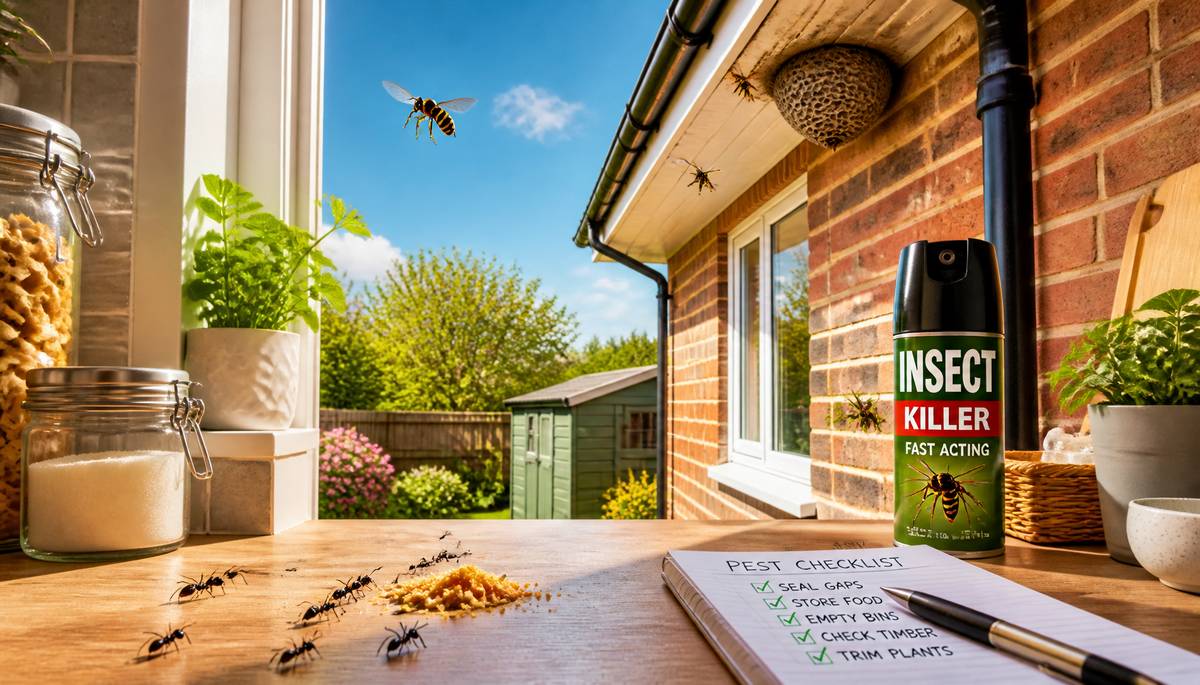
Prevention is almost always easier and cheaper than treatment. A few small habits make a noticeable difference through spring and summer: store food in sealed containers, empty bins regularly, seal cracks around windows and pipes, and keep an eye on any timber that looks damp. Outside, cutting back vegetation near the walls of the house removes easy bridges for insects to climb onto.
Final Thoughts on Insect Pest Control
A few insects indoors in spring are not usually cause for alarm, but ignoring early warning signs can turn a small issue into a much bigger job. Acting quickly, using targeted methods and bringing in a qualified technician when needed will keep most households comfortably on top of the problem through the warmer months.
|

