What to Do If You Find a Wasp Nest
Key Takeaways
- Do not attempt to remove a wasp nest yourself; professional help is safest.
- Look for papery, grey nests and increased wasp activity around a fixed point.
- Early action prevents the colony from growing and reduces risk.
- Keep children and pets away from the area.
- Professional removal is the safest and most reliable solution.
What to Do If You Find a Wasp Nest
Finding a wasp nest near your home can be worrying, especially if anyone in your household is sensitive to stings. Wasps become more aggressive when their nest is disturbed, and activity peaks in late summer and early autumn when colonies are at their largest. Knowing how to respond early makes a big difference.
Recognise the Signs of a Wasp Nest
Wasp nests are typically grey and papery, often found in sheltered spots such as eaves, sheds, loft spaces, trees, or underground. A clear sign is repeated wasp traffic to and from a single point, especially in the afternoon. If you see consistent movement in and out of one area, keep your distance.
Why Professional Wasp Nest Removal Is Essential
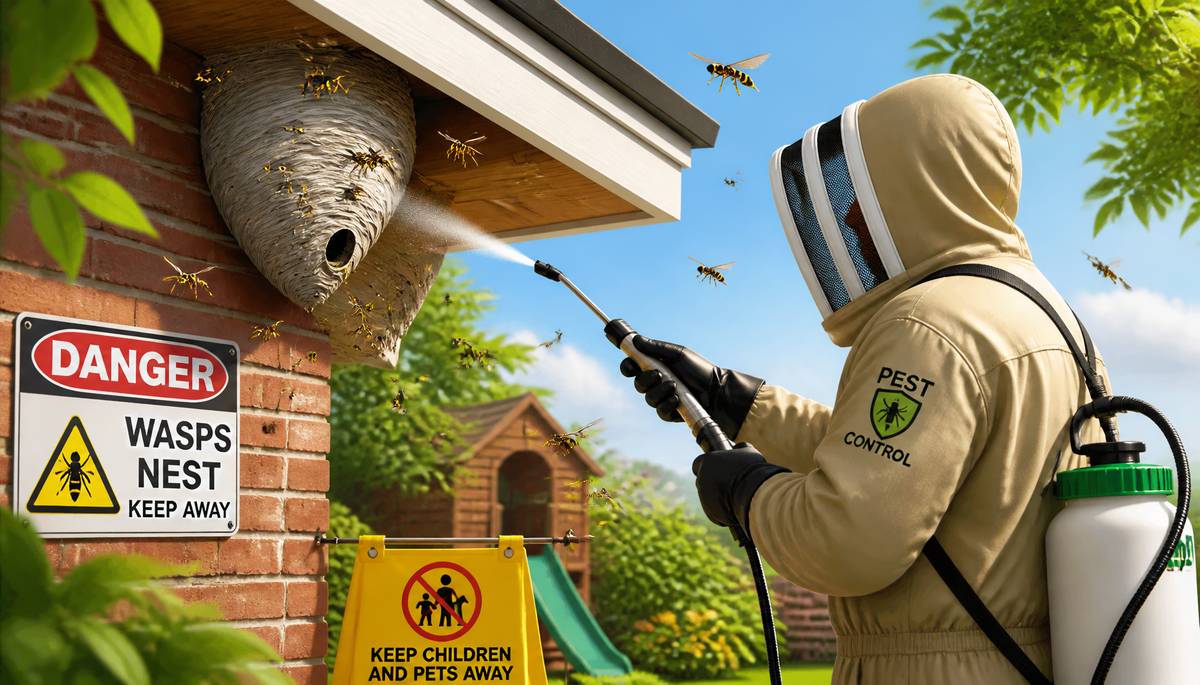
Removing a nest without proper equipment is risky and often ineffective. Nests can be hidden deep inside structures or in hard-to-reach places, and disturbing them can trigger aggressive behaviour. If you require wasp nest removal, call in the professionals. They are trained to assess the situation, use protective gear, and apply targeted treatments that deal with the entire colony safely.
When to Call in the Experts
Act early if you notice a nest forming. Smaller nests are easier to deal with, and early treatment reduces the chance of the colony expanding. If the nest is near entrances, pathways, or play areas, it’s best to arrange removal as soon as possible.
Do Not Attempt to Remove a Wasp Nest Yourself
Common DIY approaches, such as spraying with household insecticides or knocking the nest down, can provoke wasps and lead to multiple stings. Even at quieter times of day, the risk remains high without proper protection and experience.
Protect Yourself and Your Environment
Keep a safe distance from the nest and ensure children and pets stay away. Do not block or seal the entrance, as trapped wasps may become more aggressive and find alternative exits. Limit access to the area until it can be handled properly.
What Happens During Wasp Nest Removal
A typical removal involves applying a professional-grade insecticide directly to the nest, usually when activity is lower. This allows the treatment to spread through the colony effectively. In many cases, the nest is left in place once inactive, as it will not be reused. Technicians may also advise on how to reduce the chance of future nests.
Final Thoughts on Wasp Nests
A wasp nest can be unsettling, but handling it early and correctly keeps the situation under control. Professional removal is the safest approach, reducing risk to your household and ensuring the problem is dealt with thoroughly.
|
|

