Turning Photos into Canvas Art Prints
Why canvas works
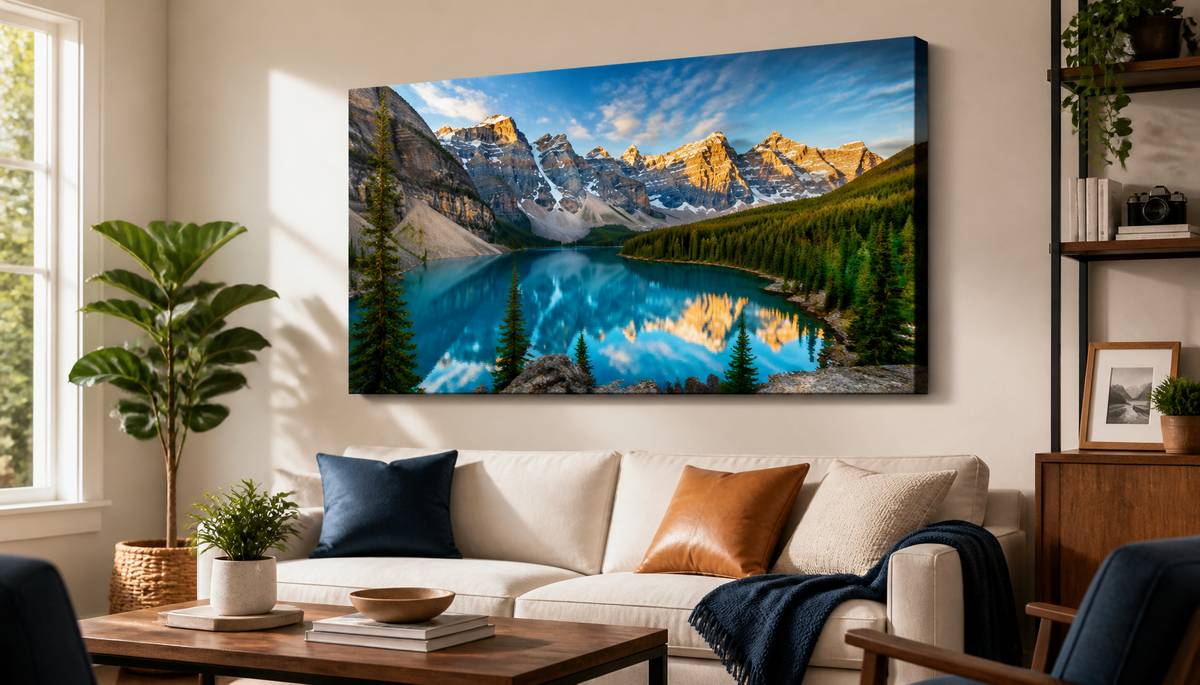
Canvas changes how a photograph sits in a space. Instead of something you glance at on a screen or tuck into a frame, it becomes part of the room itself. The surface softens the precision of a digital image just enough to give it weight without making it feel overworked. It reads less like a printout and more like something intentional.
Canvas is also practical. It is lighter than framed glass, easier to hang, and generally more durable in everyday environments. With decent materials and proper printing, it holds up for years without much maintenance.
What a canvas print actually is
A canvas print is an image printed directly onto fabric, usually cotton or a synthetic blend, then stretched over a wooden frame. That tension gives it structure and allows it to hang without additional support.
Most are finished with a protective coating that helps resist light damage, dust, and handling. The result sits somewhere between photography and painting: cleaner than a poster, less rigid than a frame, and more physical than a loose print.
How it differs from standard prints
Paper prints excel at fine detail, especially at smaller sizes. Canvas trades some of that sharpness for scale, texture, and presence. It works best when the image is large enough that the material feels deliberate rather than intrusive.
- No glass means no glare.
- Lighter and easier to install.
- Ready to hang without extra framing.
- Better suited to larger formats and open wall space.
Why turn photos into canvas
Not every image benefits from canvas, but the right ones do. Portraits, landscapes, travel shots, and quieter documentary images tend to gain something from the shift in material. They stop feeling disposable.
In a home, canvas can make personal images feel like part of the environment rather than decoration. In a workspace, it adds character without becoming overly sentimental.
Choosing the right image
The print is only as good as the file behind it. Start with something that has enough resolution for the size you want. If the source is weak, enlarging it will only make that more obvious.
- Use original, high-resolution files.
- Avoid compressed images from social media.
- Keep important details away from the edges if wrapping is used.
- Choose images with a clear focal point and stable composition.
Editing before print
Images usually need minor adjustment before printing. Canvas can read slightly darker and soften fine detail, so small corrections go a long way.
- Increase brightness slightly if needed.
- Add moderate sharpening to retain detail.
- Adjust contrast rather than over-saturating.
- Crop to the final dimensions before printing.
Common mistakes
- Using low-resolution images and expecting clean results.
- Forcing a size that requires heavy cropping.
- Losing important elements in the wrapped edges.
- Over-editing until the image looks artificial.
- Printing files that only worked at small screen sizes.
How printing works
Most canvas prints are produced using high-resolution inkjet methods with pigment-based inks. These inks sit on the surface rather than soaking in completely, which helps with longevity and colour stability.
After printing, the canvas is stretched over a wooden frame. This can be done by hand for more control or by machine for consistency. Both approaches work if the materials and handling are solid.
Size and layout
The right size depends on both the image and the space. Too small and it disappears. Too large and it dominates the room in the wrong way. The goal is proportion, not scale for its own sake.
Single-panel prints suit most images. Multi-panel layouts work when the composition can handle being split.
- Single panel for portraits and simple compositions.
- Multi-panel for wide or flowing scenes.
- Square formats for centred subjects.
- Panoramic formats for landscapes and horizon lines.
Wrap styles
Edge treatment affects the final look more than most people expect. A gallery wrap extends the image around the sides for a clean, frameless finish. A mirrored or solid edge is safer when important content sits near the border.
Text or graphic additions can work, but restraint matters. A small amount adds context. Too much makes it feel generic.
Framed or unframed
Unframed canvas suits modern interiors and keeps things simple. A floating frame adds structure and can help the piece sit better alongside traditional framed work. The choice depends on the room and the image.
Placement
Canvas works best where it can be viewed at a natural distance. Living rooms, hallways, bedrooms, and offices all suit it well. Avoid areas with high humidity or constant temperature changes.
- Hang at eye level.
- Keep out of direct sunlight.
- Avoid heat sources and damp areas.
- Give larger pieces enough surrounding space.
Care
Maintenance is simple. Dust with a soft, dry cloth and avoid cleaning chemicals or rough materials. If needed, use minimal moisture and a light touch.
The main risks are prolonged sunlight, humidity, and physical damage. Under stable indoor conditions, a well-made print lasts a long time.
Ordering online
Printing services vary more than their branding suggests. Focus on materials and output quality rather than marketing language. Look for archival inks, solid canvas weight, and clear previews of cropping and edge wrapping.
Reviews are only useful when they mention specifics such as colour accuracy, packaging, and frame construction. General claims about quality do not tell you much.
Final thought
Canvas does not improve a weak image, but it can give a strong one a more permanent presence. Done well, it turns something you took into something you live with.
|
|

