Choosing Electric Radiators: Hassle-Free, Eco-Friendly Heating Room by Room
 Central heating used to be simple: a big boiler, chunky pipes, radiators everywhere, and one thermostat on the wall nobody dared touch. Comfortable enough, but not exactly smart, cheap, or flexible.
Modern homes are different. People work from home, use some rooms all day and others hardly at all. Energy prices are unpredictable, and there’s more pressure to cut carbon without freezing. That’s exactly where a well-chosen electric radiator setup starts to make sense.
The days when “electric heater” meant a glowing bar in the corner are gone. A quality electric radiator now looks like a normal radiator and warms like one, but gives control room by room with minimal hassle and a much cleaner relationship with energy use.
Why Electric Radiators Suddenly Make Sense
Electric heating used to be the last resort: expensive to run, clunky controls, and ugly boxes on the wall. That reputation still lingers, but it’s outdated for modern electric radiators.
Two big shifts changed the game:
- The grid is getting greener. More renewables and less coal mean electricity is becoming a cleaner way to heat homes each year.
- Control technology has caught up. Digital thermostats, room-by-room scheduling, and app control mean heat goes where it’s needed, when it’s needed.
Instead of one boiler trying to manage the whole house, each radiator runs its own plan. That’s better for comfort and for the bill.
What “Hassle-Free” Actually Means
“Low maintenance” often sounds like marketing fluff, but with electric radiators it’s mostly accurate.
- No boiler
- No flue
- No gas checks
- No bleeding radiators or worrying about pilot lights
A typical setup looks like this:
- Choose the right size unit for each room
- Mount and connect it (professionally where required)
- Set the schedule and temperature
- Leave it to run
There are no pumps to fail, no sludge buildup, and no pressure gauges to monitor. If one unit fails, only one room is affected—not the whole house.
Flexibility is another advantage. Move a home office? A plug-in unit can move with it, and even hardwired systems can be upgraded without major disruption.
Eco-Friendly: More Than a Green Label
Electric radiators don’t create green energy, but they allow precise control over how energy is used—which is where the environmental benefit comes from.
- No on-site emissions: No combustion, no flue gases, no carbon monoxide risk.
- Room-by-room zoning: Unused rooms can stay cooler, reducing waste.
- Works with renewables: Pairing with solar panels or green tariffs amplifies the benefit.
- Precision control: Modern thermostats maintain stable temperatures and avoid energy-wasting fluctuations.
Energy not used is always the cleanest energy—and zoning makes that possible.
Cost-Effective: Where Savings Come From
Electric heating can be expensive if used poorly, but well-managed systems can be surprisingly efficient.
- Heat only occupied rooms: Spare rooms can sit at lower temperatures most of the time.
- Accurate thermostats: Prevent overheating and wasted energy.
- Smart scheduling:
- Living room warm in the evening
- Bedrooms heated briefly before sleep and waking
- Home office heated during working hours
- Fast response times: Quick heat-up reduces unnecessary runtime.
Upfront costs are often lower than installing or replacing a full central heating system. Long-term savings depend on good control and usage habits.
Controlling Heat by Room
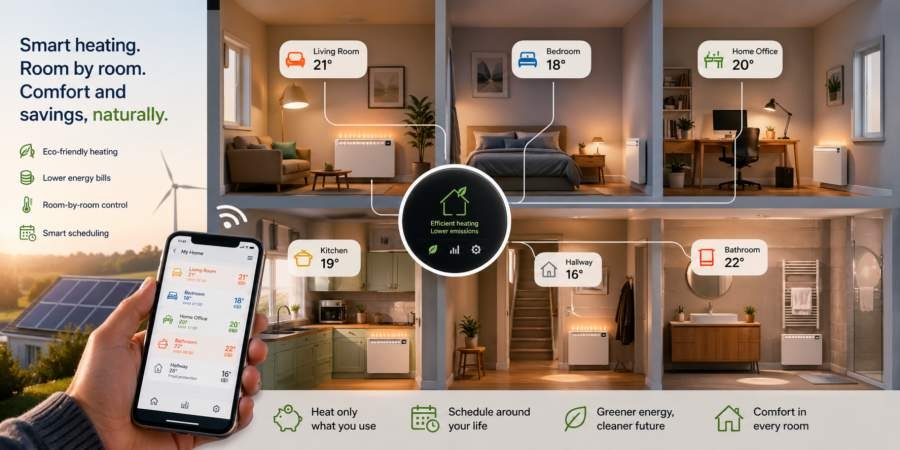
Electric heating works best when each room is treated as its own zone.
Living Room - Slightly higher output for quick warmth
- Stable temperature control
- Flexible scheduling
Bedrooms - Lower background temperature
- Short heating bursts before sleep and waking
- Quiet operation
Home Office - Fast warm-up
- Weekday-focused scheduling
- Flexible controls
Kitchen - Avoid oversizing due to appliance heat
- Easy-to-clean design
- Careful placement
Hallways and Landings - Lower base temperature
- Smaller units
- Avoid unnecessary heating
Bathrooms - Towel rail-style radiators
- Short heating bursts
- Proper safety ratings
Features Worth Paying For - Reliable digital thermostat
- 24/7 programming
- Open-window detection
- Energy usage display
- Wi-Fi/app control (if useful)
- Strong build quality and warranty
Cheaper panel heaters often lack these features, which affects comfort and efficiency over time.
Sizing by Room
Getting the size right is key:
- Undersized: Runs constantly and struggles in cold weather
- Oversized: Costs more upfront than necessary
Basic approach:
- Measure room dimensions
- Consider insulation and exposure
- Use manufacturer guidelines
If unsure, slightly oversizing is usually safer than undersizing.
Common Mistakes to Avoid - Buying purely on price
- Ignoring insulation
- Poor placement behind furniture or curtains
- Overusing boost mode
- Treating every room the same
Avoiding these makes a significant difference in performance and cost.
A Modern Way to Think About Heating
Electric radiators suit modern lifestyles: flexible schedules, mixed-use spaces, and a growing focus on energy efficiency.
Instead of one central system, each room gets exactly what it needs:
- Right-sized heat
- Right timing
- Right temperature
The result is less hassle, cleaner heating as the grid improves, and lower bills by avoiding wasted heat.
|
|