How to Improve Site Access Without Permanent Construction
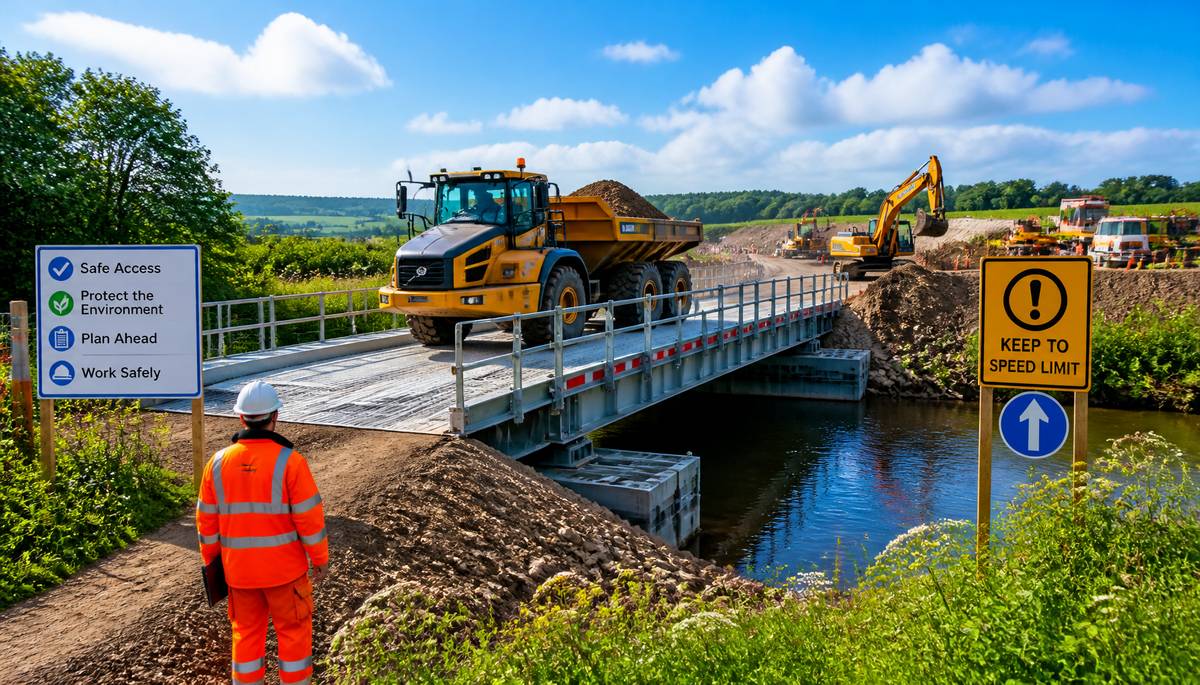 Whether it's a construction site, utility project, infrastructure upgrade, or public event, reliable access is one of the first challenges that needs to be solved. Reaching the work area safely and efficiently can have a significant impact on productivity, project costs, and overall safety.
However, permanent roads or bridges are not always practical. Some projects are short-term, while others take place in environmentally sensitive locations where permanent structures would be unnecessary or inappropriate. In these situations, temporary access solutions provide a flexible and cost-effective alternative.
Assess the Site Before Work Begins
Every site presents different challenges. Before deciding on an access solution, carry out a detailed assessment of the surrounding environment.
Consider factors such as:
- Existing roads and access routes
- Rivers, streams or drainage channels
- Ground conditions
- Slopes and gradients
- Vehicle sizes and weights
- Environmental restrictions
- Duration of the project
Understanding these factors early helps prevent delays and reduces the likelihood of unexpected access problems once work is underway.
Avoid Unnecessary Permanent Infrastructure
Constructing permanent roads or bridges can significantly increase project costs and often requires extensive planning permission, engineering work and environmental assessments.
For projects lasting only a few weeks or months, temporary infrastructure often provides everything needed without the long-term commitment. It allows organisations to create safe, compliant access while avoiding investment in structures that will no longer be required once work is complete.
Choose Temporary Bridge Solutions Where Required
Many sites are separated by rivers, drainage channels, railway crossings or difficult terrain that cannot safely support vehicles.
In these situations, certified temporary bridges provide an efficient way to establish access for construction traffic, plant machinery, emergency vehicles and site personnel. Companies such as Beaver Bridges specialise in rapid temporary bridge rental across the UK, supplying, installing and removing certified bridge systems for construction projects, emergency works, utility diversions and public events.
Because these bridges are designed for temporary deployment, projects can begin sooner while maintaining high safety standards throughout the construction period.
Consider Future Project Phases
Access requirements often change as projects develop. Heavy machinery may be needed during the early stages, while later phases involve lighter vehicles, contractors, and deliveries.
Flexible temporary access solutions can be adapted throughout the project, helping teams respond to changing operational needs without rebuilding permanent infrastructure at every stage.
Planning for these transitions improves efficiency and minimises disruption.
Prioritise Health and Safety
Poor site access increases the risk of accidents, delays and equipment damage. Vehicles attempting to navigate unsuitable crossings or unstable ground can create serious hazards for both workers and the surrounding environment.
Access routes should be designed with:
- Appropriate load capacities
- Clear traffic management
- Pedestrian separation where required
- Stable ground conditions
- Regular inspections throughout the project
Temporary infrastructure should always meet relevant engineering and safety standards before being put into service.
Reduce Environmental Impact
Many projects take place near protected habitats, waterways or agricultural land where permanent construction would leave unnecessary long-term impacts.
Temporary access solutions allow contractors to minimise ground disturbance while maintaining operational efficiency. Once the project is complete, temporary bridges and access structures can be removed, allowing the site to be restored with minimal lasting environmental effects.
This approach is particularly valuable for conservation projects, utilities work and rural developments.
Plan for Emergency Access
Unexpected situations can arise during any project, including severe weather, equipment failures or emergency repairs. Having reliable access routes already in place allows emergency vehicles, engineers, and specialist equipment to reach the site quickly when required.
Temporary bridges are frequently used during emergency infrastructure repairs because they can be installed rapidly while maintaining safe access for essential operations.
Work With Experienced Specialists
Temporary access systems must be carefully planned and professionally installed to ensure they meet the demands of each project.
Working with experienced providers helps ensure bridge specifications, load requirements, and installation methods are appropriate for the site conditions. Specialist teams can also advise on the most suitable solution for complex environments, helping projects remain compliant while reducing unnecessary delays.
Final Thoughts
Improving site access does not always require permanent roads or bridges. For many construction, infrastructure, utility and event projects, temporary access solutions offer a practical, safe and cost-effective alternative that keeps work moving without leaving permanent changes to the landscape.
By assessing site conditions carefully, prioritising safety and selecting flexible temporary infrastructure where appropriate, organisations can improve efficiency, reduce environmental impact and ensure projects remain on schedule from start to finish.
|
|