How to Choose the Right Commercial Flooring for Your Businesssubmitted on 14 July 2026
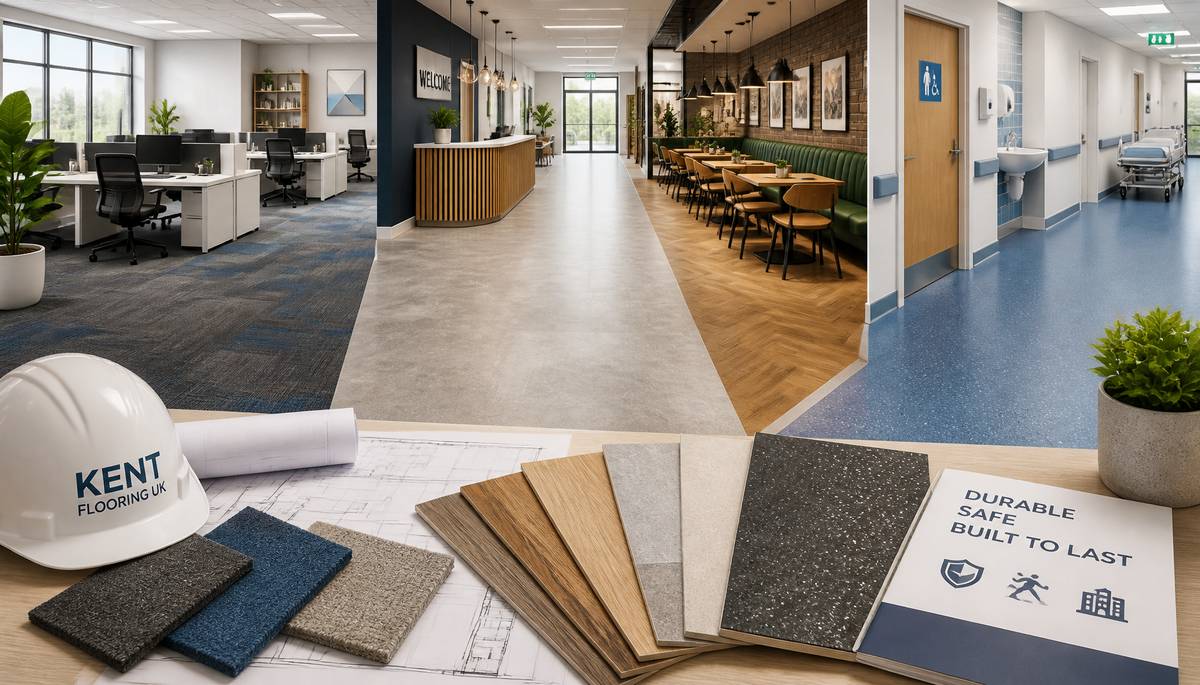 Choosing a new floor for your business is a bigger decision than most people realize. The right floor can make your building look smart, keep staff and customers safe, and last for many years without giving you any trouble. The wrong floor can wear out fast, look tired within months, or even cause accidents. If you are searching for commercial flooring, here is what you need to think about before you get a quote.
Start with how the space is used
Every business uses its floors differently, so the first question to ask is what will actually happen on top of it. An office with people walking around in normal shoes has very different needs to a busy kitchen, a retail shop with trolleys, or a school corridor full of children. Think about footfall, spills, heavy equipment, and how often the space gets cleaned. Once you know what the floor has to cope with, it becomes much easier to pick the right material.
Think about durability first, style second
It is tempting to pick a floor because it looks good in a photo, but style should never come before durability in a commercial setting. A beautiful floor that scratches, stains, or cracks within a year will end up costing you more in repairs and downtime than a slightly plainer floor that lasts a decade. The good news is that most modern commercial flooring options now come in a wide range of colours and finishes, so you rarely have to choose between looks and toughness.
Carpet tiles remain a popular choice for offices because they are comfortable underfoot, help with noise, and can be replaced tile by tile if one area gets damaged. Commercial vinyl flooring, including sheet and tile formats, is a strong choice for areas that need to be wipeable and hardwearing, such as retail units or medical spaces. If you want a warmer, more premium feel without losing practicality, luxury vinyl tile gives you the appearance of real wood or stone with far better resistance to moisture and wear.
Do not forget safety
Safety flooring is not just a box to tick. Slips, trips and falls are one of the most common causes of workplace injury, so the surface underfoot matters more than many business owners realize. Non-slip and safety flooring is especially important in kitchens, washrooms, and any area where water or grease might end up on the floor. If your business operates in a wet room or hygiene-sensitive environment, look for flooring designed specifically for that purpose rather than trying to make a standard floor work.
Match the floor to your industry
Different sectors have different priorities. A school needs flooring that can survive scuffed shoes, spilled drinks, and daily heavy use without needing constant repairs. A hospitality venue needs something that looks welcoming to guests but can be cleaned quickly between sittings. Healthcare and care settings need flooring that supports strict hygiene standards while still being comfortable and safe to walk on. Getting the right ceramic tiling or vinyl solution for your specific industry will save you time and money over the life of the floor.
Plan for minimal disruption
Most businesses cannot afford to shut their doors for weeks while flooring work takes place. When you are comparing options, ask how the installation will be managed and how long it will take. A good contractor will plan the work in stages, work outside your normal hours where possible, and make sure floor preparation is done properly before anything new goes down. Rushing this stage is one of the biggest causes of flooring problems later on, so it is worth taking the time to get it right from the start.
Think about long term costs, not just the price of the floor
The cheapest quote is not always the best value. When you compare flooring options, look beyond the initial price and think about how long each option is likely to last, how much maintenance it will need, and how easy it will be to repair if something gets damaged. A slightly more expensive floor that needs almost no upkeep for ten years can work out far cheaper than a budget option that needs replacing every few years. It is also worth asking your contractor about warranties, since a longer guarantee usually reflects a manufacturer's confidence in how the product performs under heavy use.
Get expert advice before you decide
With so many options available, from contract carpets to rubber studded flooring, it is easy to feel overwhelmed. A good flooring contractor will visit your site, understand how the space is used, and recommend options that suit both your budget and your day to day operations. This kind of guidance is especially useful if you are managing a large or unusual space, or if you need to meet specific industry regulations.
A site visit also gives a contractor the chance to spot problems before they start, such as damp subfloors or uneven surfaces that would affect the finished result. Sorting these issues out early, rather than discovering them halfway through a project, is one of the simplest ways to avoid delays and unexpected costs.
Why businesses choose us
At Kent Flooring UK, we have supplied and installed commercial flooring across offices, schools, retail units, and healthcare settings throughout Kent, London and Essex for over 20 years. Our in-house teams handle everything from the first site survey through to floor preparation and final installation, so there is no subcontracting uncertainty and no guesswork about who is responsible for the finished result.
If you are planning a project and want advice on the best commercial flooring for your business, our team can talk you through the options, including vinyl flooring, carpets, and ceramic tiling, and explain what floor preparation will be needed for your site.
|

