Plumbing Considerations Before a Kitchen or Bathroom Remodel
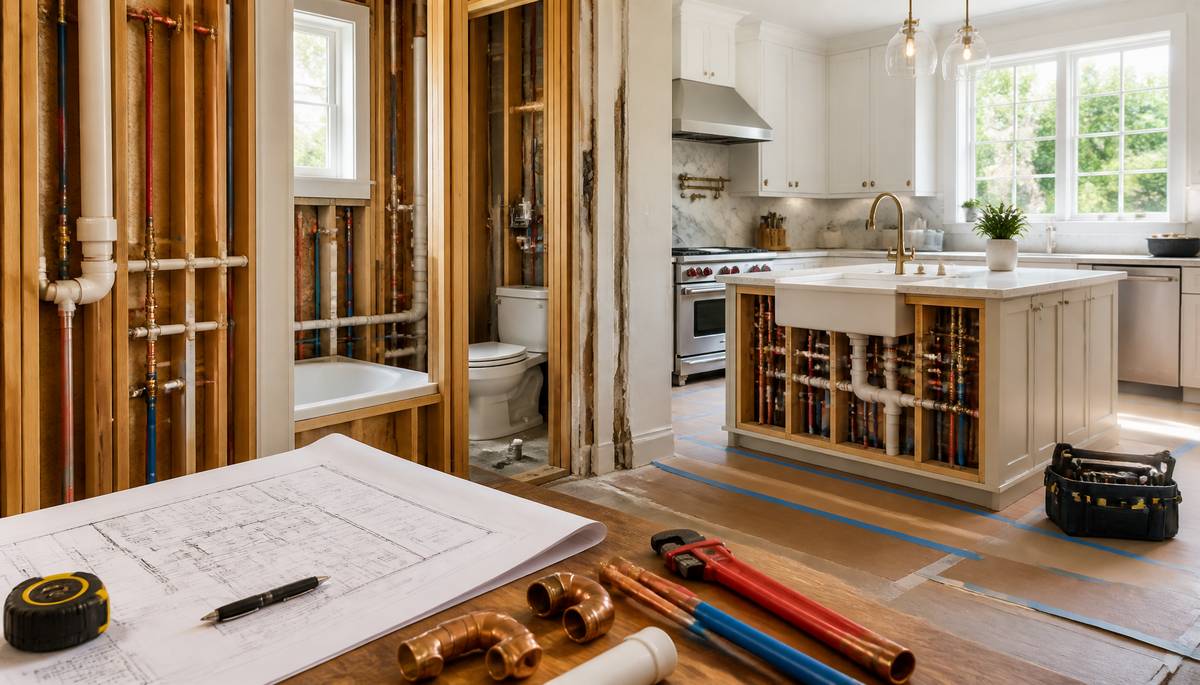 A kitchen or bathroom remodel is one of the most rewarding upgrades you can make to your home, but it is also one of the most plumbing-intensive. New layouts, new fixtures, and new appliances all depend on a system of supply lines and drains that was usually built for the room you are tearing out, not the one you are dreaming about. Thinking through the plumbing early, before the demolition starts, is the single best way to avoid surprise costs and delays once the project is underway.
Too many homeowners pick finishes and fixtures first and treat the plumbing as an afterthought, only to discover that the farmhouse sink they love will not fit the existing drain, or that moving the toilet three feet means relocating a vent and cutting into the slab. A little planning up front saves money, time, and frustration later.
A kitchen or bathroom remodel is one of the most rewarding upgrades you can make to your home, but it is also one of the most plumbing-intensive. New layouts, new fixtures, and new appliances all depend on a system of supply lines and drains that was usually built for the room you are tearing out, not the one you are dreaming about. Thinking through the plumbing early, before the demolition starts, is the single best way to avoid surprise costs and delays once the project is underway.
Too many homeowners pick finishes and fixtures first and treat the plumbing as an afterthought, only to discover that the farmhouse sink they love will not fit the existing drain, or that moving the toilet three feet means relocating a vent and cutting into the slab. A little planning up front saves money, time, and frustration later.
Know What Moving Fixtures Really Involves
The placement of sinks, toilets, tubs, and showers is tied directly to where your supply lines and drains already run. Keeping fixtures in roughly the same spots is the most budget-friendly path. Moving them, on the other hand, can mean rerouting drain lines, adding or relocating vents, and in slab-foundation homes, breaking into concrete to reach the pipes underneath.
None of that is a reason to abandon a layout you love. It simply means the cost and timeline change significantly when fixtures move, so you want to know that before you fall in love with a floor plan. A plumber can tell you which changes are simple and which ones open up the floor.
If you are considering a remodel and are unsure whether your existing plumbing system can support your plans, it may be worthwhile to have a licensed plumbing and remodeling professional, such as Alliance Plumbing Services, evaluate the situation before you move forward with a final design.
Check the Age and Condition of Your Existing Pipes
A remodel is the ideal time to look at what is hidden behind the walls. If your home still has older galvanized steel pipes, or if you have dealt with recurring leaks, low pressure, or discolored water, opening up the space gives you a rare chance to upgrade the lines while they are exposed.
Replacing aging pipes during a remodel is far cheaper and less disruptive than tearing into a finished wall later. It also protects the investment you are about to make, since the last thing you want is a pipe failing behind brand-new tile a year after the project wraps.
Plan for Drain Sizes and Venting
Different fixtures need different drain sizes, and every fixture needs proper venting to drain quietly and completely. A new kitchen island sink, a second bathroom vanity, or a large soaking tub can all require drain and vent work that the original room never had.
Skipping this step is a common cause of slow drains, gurgling, and sewer odors in otherwise beautiful new spaces. Getting the drain and vent layout right from the start keeps everything flowing the way it should.
Account for New Appliances and Fixtures
Modern kitchens and bathrooms often add fixtures that increase demand on your plumbing. A pot filler, a dishwasher, a second sink, a steam shower, a bidet, or a high-capacity water heater all draw on your supply and drain systems.
Before you finalize the design, make sure your water supply and water heater can keep up with the new load. Upgrading to a larger or tankless water heater during a remodel is often the smart move, especially if you are adding fixtures that all want hot water at once.
Mind the Water Pressure and Shutoffs
New fixtures, particularly rainfall showerheads and multi-spray systems, can be sensitive to water pressure. If your pressure runs high, it can stress new fixtures and shorten their life. If it runs low, that fancy shower will underperform. Knowing your numbers ahead of time lets you correct the pressure before the new hardware goes in.
It is also a good time to add or update shutoff valves at each fixture. Easy-to-reach, working shutoffs make future maintenance and any small repairs far simpler down the road.
Do Not Overlook Permits and Code
Plumbing work tied to a remodel often requires permits and must meet local code, especially when you move fixtures, add lines, or change the water heater. Cutting corners here can create problems when you sell the home, and improperly vented or sloped lines can cause real performance issues.
A licensed plumber understands the local requirements, pulls the right permits, and makes sure the work passes inspection. That paperwork protects you and keeps the project on solid ground.
Build in a Contingency for the Unexpected
Once the walls and floors are open, remodels have a way of revealing things no one could see beforehand, such as a hidden leak, corroded pipe, or a previous repair that was never done correctly. Setting aside a contingency in both your budget and your timeline means these discoveries become manageable bumps rather than project-stopping crises.
This is also why an early inspection pays off. The more your plumber can assess before demolition, the fewer surprises tend to show up midway through.
Start With a Plan, Not a Demolition
The most successful kitchen and bathroom remodels start with a clear understanding of what the plumbing can do and what it will take to support the new design. Mapping that out before the first wall comes down keeps your project on budget, on schedule, and free of the costly mid-stream changes that derail so many renovations.
For the parts that call for a trained eye, a local, licensed plumber like Alliance Plumbing Services can assess your existing system, advise on what your layout will require, and handle the rough-in and fixture work so your finished space looks great and performs just as well for years to come.
|
|

